
Chronic diseases, such as cardiovascular disease and peripheral artery disease, are rising worldwide but are most prevalent in major economies. The American Heart Association projects that within the next 30 years, at least 61% of US adults – about 184 million people – will face some type of cardiovascular disease. In Europe, cardiovascular disease affects more than 60 million people and accounts for more than 40% of deaths annually on the continent.
These trends are driving increased demand for minimally invasive procedures, which offer significant advantages including reduced patient recovery times and improved operational efficiency for healthcare providers.
As demand for minimally invasive procedures continues to increase, the market is responding with notable shifts in treatment approaches. Market intelligence firm GlobalData anticipates that transcatheter procedures will grow at a faster rate than open procedures, especially in North America and Europe where hospital infrastructures are well developed.
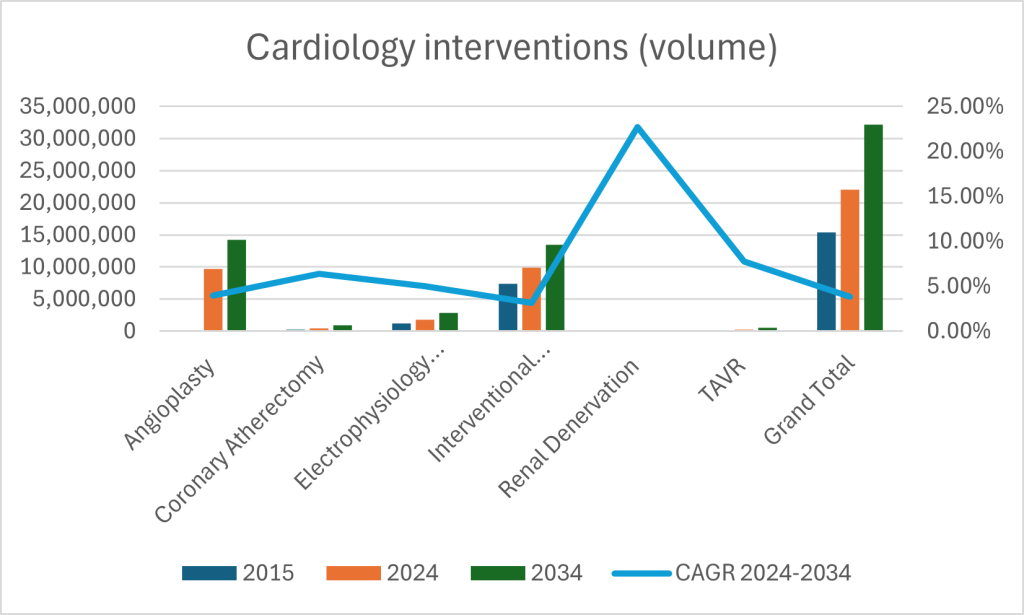
The chart below shows that renal denervation (RDN) and Transcatheter Aortic Valve Replacement (TAVR) are increasingly likely to be performed as interventions rather than open surgery.
Furthermore, the adoption of transcatheter accessories in cardiovascular treatments is projected to increase steadily, reflecting ongoing advancements in medical technology and patient care.
Precision and miniaturisation
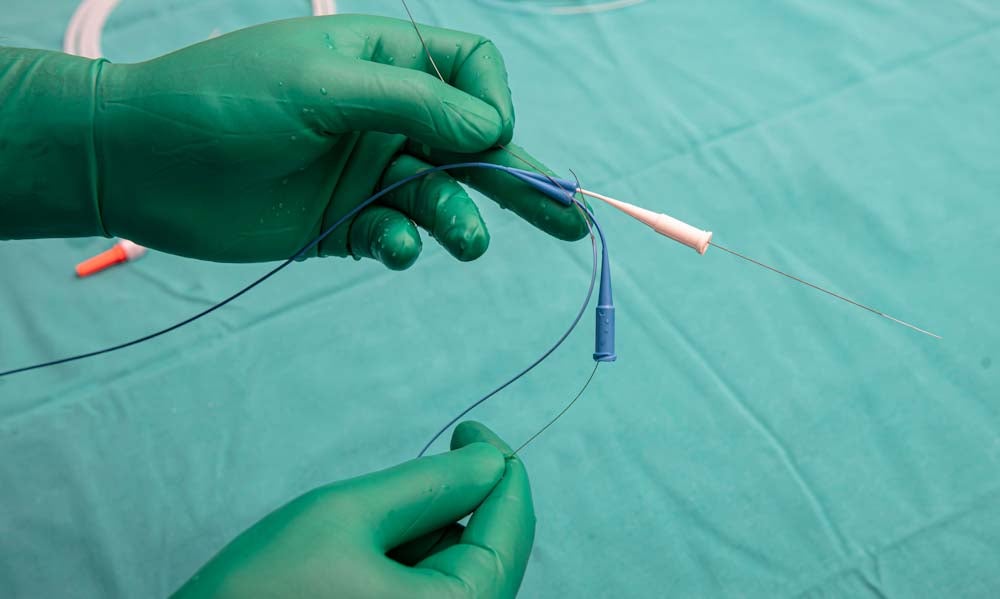
Transcatheter accessories are used to navigate safely through a patient’s cardiovascular system to access the targeted location for a given procedure, whether that be angioplasty, atherectomy, or a valve replacement. These devices are responsible for facilitating surgical access, navigating through arterial pathways, and delivering procedure specific instruments and implants.
They are engineered in a range of sizes and configurations to accommodate the diverse anatomical variations found among patients, supporting optimal outcomes across a spectrum of cardiovascular interventions.
The drive for miniaturisation and precision has been fuelling innovations in the catheter and surgical systems space over the past decade.
“Think about it. To replace an aortic valve involves a catheter having to snake up through the body via a puncture through someone’s arm or groin and snake all the way to their heart, through vessels that get as narrow as spaghetti,” says Charlie Whelan, Senior Director, Consulting, GlobalData Healthcare. “These catheters have to be sufficiently torquable to bend and turn, sometimes 180 degrees, without causing any damage to the cardiac system or any other part of the body.
“So, the focus for the medical devices industry is understandably on innovations that can make invasive procedural techniques the most efficient, reducing trauma during surgery and reducing risk for the patient.”
The miniaturisation of stents and catheters that support these minimally invasive heart interventions requires ultra-fine wire components – guidewires -, which demand metallurgical capabilities and manufacturing expertise beyond what many medical device manufacturers have in-house.
A new whitepaper from Alleima, a specialist in advanced metallurgy and state-of-the-art medical wire manufacturing technologies, explores the state of guidewire technology, highlighting their critical role in shaping the type of applications the medical industry can perform through minimally invasive surgery.
The whitepaper explores some of the aspects and challenges of manufacturing guidewires and how the material and technology required is evolving as more functionality is demanded of these ultra-fine wire-based components. It delves into why nitinol, a biocompatible alloy with unique characteristics, is becoming the material of choice for the manufacture of guidewires, particularly suited for cardiovascular care and with high potential to shape the future of robotic surgery systems.
Equipped with decades of medical insight and awareness of surgeons’ needs, Alleima’s engineering team efficiently translates these requirements into new medical devices in partnership with world-leading medical OEMs.
The report highlights Alleima’s expertise in designing, developing and manufacturing guidewires for cardiovascular applications but also for treatments in the fields of urology, oncology and neurology.
To find out more about guidewires and how they are evolving, download Alleima’s whitepaper here.