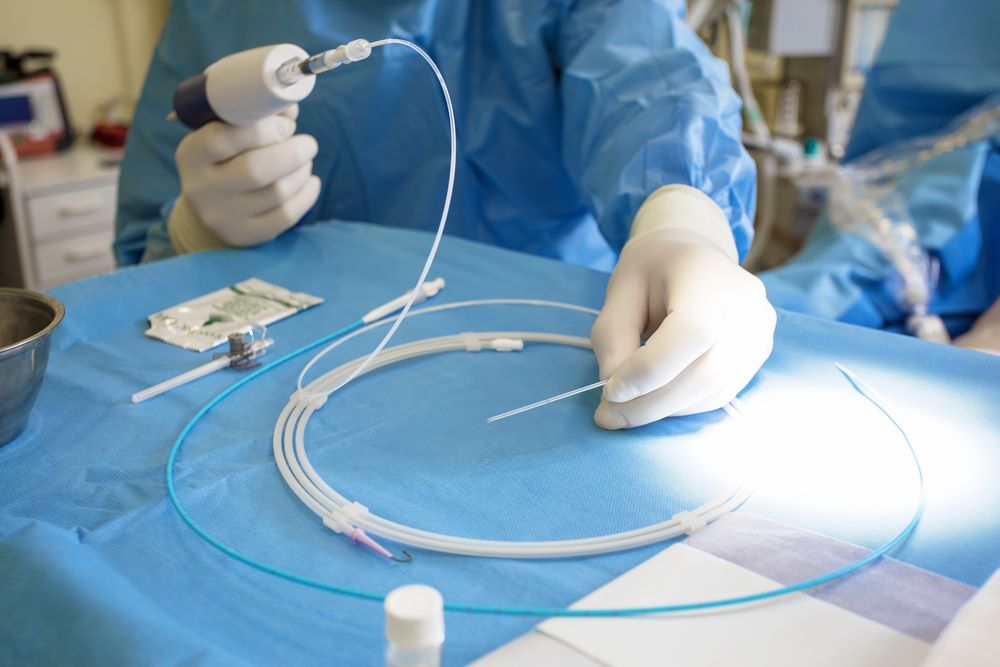
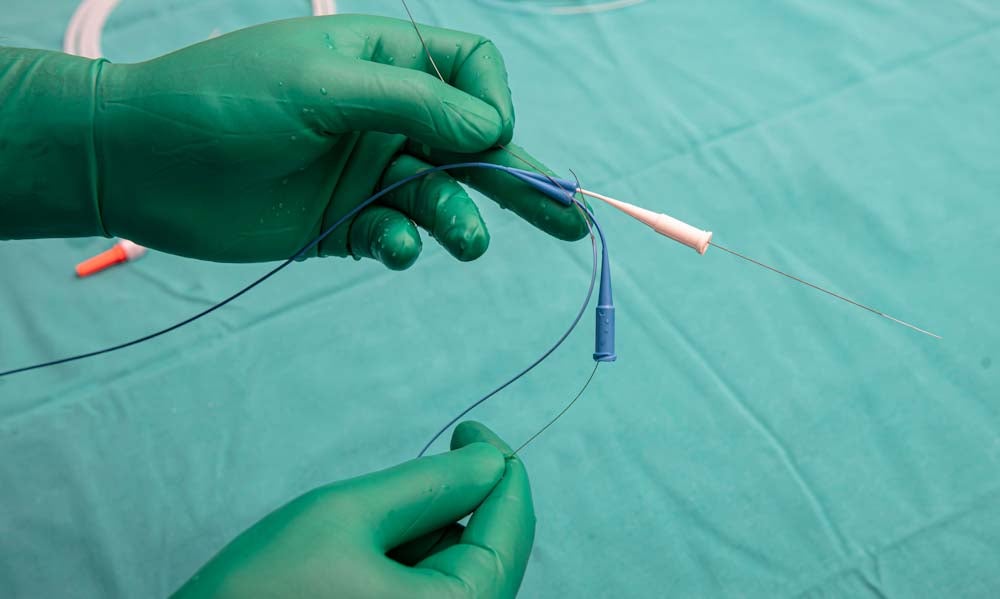
Guidewires are central to numerous lifesaving procedures. Whether navigating coronary arteries, accessing peripheral vessels, or steering through complex urological pathways, guidewires provide the route by which medical devices such as catheters, balloons and stents reach their destination.
Successful performance can determine both the efficiency of a procedure and its safety, and behind every effective guidewire lies expertise in materials science, geometry and surface engineering.
Precise changes in core diameter, taper, alloy composition, or coating can significantly alter how a wire behaves once it enters the body. As complex minimally invasive procedures are on the rise, this precision is essential.
Balancing flexibility, support and control
Core diameter largely determines the balance between flexibility and support. Smaller diameters produce more flexible wires that can navigate tight curves and tortuous vessels, while larger diameters increase stiffness, offering greater pushability and support for device delivery. The weight of this balance depends on the application.
“There are so many different applications that are being performed with these guidewires, and this is also what determines how flexible and how much support the guide wires should provide,” says Tom Schmid, global product manager, Alleima. For example, a wire intended for urological procedures, where channels may be narrow or partially obstructed, often benefits from a stiffer core that can be pushed forward with confidence. By contrast, clinicians in cardiovascular interventions frequently work within fine, winding vessels where flexibility is paramount.
The way in which the core tapers toward the distal tip also plays a crucial role in the transmission of force and rotation along the wire. Longer tapers tend to deliver smoother torque transmission and improved trackability, helping the wire follow its own tip through curves. Shorter tapers can increase stiffness near the tip, but may also raise the risk of prolapse, where the wire folds back on itself under load.
Tip taper further influences whether the distal end is blunt and atraumatic or more pointed, enabling penetration through resistant lesions such as chronic total occlusions. These geometrical choices directly affect crossability (the ability of a wire to pass through a lesion with minimal resistance) and supportability (its capacity to act as a stable rail for other devices).
Torqueability remains a defining performance metric for guidewires. Clinicians rely on precise rotational control to steer through complex anatomy, and the expectation is that movement applied at the proximal end is faithfully reproduced at the tip. Achieving this requires not only careful taper design but also the appropriate choice of core material and distal construction.
Stainless steel and nitinol: materials that shape performance
The choice of core material is fundamental to a guidewire’s performance. For decades, stainless steel has been valued for its stiffness, support and excellent torque control. Where clinicians need to push through resistant anatomy or deliver devices across challenging lesions, its rigidity can be a decisive benefit. The trade-off is reduced flexibility, which can limit its suitability in highly torturous vessels and increase the risk of vessel trauma if not carefully managed.
This is where nitinol has reshaped expectations of what guidewires can achieve. Its super-elastic properties allow it to undergo significant bending and deformation while returning to its original shape, delivering exceptional kink resistance and durability. “In general, nitinol provides better flexibility and a higher variety of application use cases,” Schmid explains, especially, he notes, in procedures where delicate navigation and reduced trauma are priorities.
Crucially, nitinol is not a single, fixed material. By adjusting alloy composition and processing, manufacturers can fine-tune stiffness and elastic behaviour to suit different clinical needs. This tunability enables designers to create wires that combine flexibility with effective torque transmission, even in complex anatomies.
Tip construction further enhances these properties, with many guidewires incorporating shaping ribbons that extend beyond the core to create a more flexible distal segment. On nitinol wires, these ribbons are essential for retaining the shape that clinicians impart to the tip for steering. Tip coils, often made from platinum, add radiopacity for visibility under fluoroscopy and provide a softer, more atraumatic interface with vessel walls.
Recent innovations have sought to refine this balance even further. For example, micro-cut nitinol sleeves can replace traditional coiled tips, allowing more of the applied torque to be transmitted through the sleeve rather than the core wire, resulting in improved rotational response, reduced friction, and maintained flexibility.
Coatings and trackability in tortuous anatomy
While the core defines the structural behaviour of a guidewire, its surface governs its interaction with the body. Among the most critical performance attributes influenced by surface engineering is trackability: the ability of a wire to follow its own tip smoothly through curved and tortuous vessels without buckling or kinking.
Buckling occurs when a wire encounters resistance and continues to be pushed, causing the wire to bend back on itself, compromising control, and potentially damaging tissue. Preventing this requires appropriate stiffness and careful management of friction between the wire and the vessel wall. Consequently, hydrophilic coatings have become central to modern guidewire design. When exposed to fluid, these coatings become highly slippery, reducing friction and allowing the wire to glide more easily through vessels. Conversely, hydrophobic coatings also have their place when the user places particular emphasis on tactile feedback for precise and equally careful navigation while the risk for tissue trauma can be neglected.
Coatings also influence the tactile feedback clinicians receive. Spring coils at the tip can enhance feedback and responsiveness, but may increase friction, making navigation more difficult in tight, tortuous anatomy. Designers must therefore balance feedback against ease of movement, tailoring surface properties to the demands of each application.
Why collaboration between materials specialists, device manufacturers and clinicians is critical
Today’s clinicians seek precise, application-specific performance, including controlled flexibility, reliable torque response, kink resistance, biocompatibility, and durability.
“With increasing knowledge about materials, you also increase the possibilities of potential adjustments,” Schmid explains. “For almost every application these days, you can create and design the guidewire that fits it perfectly.”
This shift has advanced guidewire development into a more collaborative process, requiring close engagement between materials specialists, device manufacturers, and clinicians. At Alleima, that collaboration is central, with a focus on co-development and working closely with partners to understand not only technical requirements, but also how devices will be used in real clinical settings. By gaining insight into the needs of their customers’ customers, Alleima can recommend optimal alloys and designs, support efficient prototyping and testing, and help streamline development from concept to validation.
Vertical integration plays a key role in this approach. By aligning design, manufacturing and process development within a single organisation, Alleima reduces complexity for customers and ensures consistency across the value chain. “There’s not that much back and forth as if you work with several suppliers,” Schmid explains. “Working directly with Alleima, customers get what they truly need in terms of product capabilities.”
About Alleima
Alleima, a world-leading engineering company headquartered in Sandviken, Sweden, is a specialist in advanced metallurgy and state-of-the-art medical wire manufacturing technologies, including nitinol and laser processing and surface treatments in its medical unit.
The company explores the state of guidewire technology, highlighting their critical role in shaping the type of applications the medical industry can perform through minimally invasive surgery in the fields of cardiovascular applications and treatments in the fields of urology, oncology, and neurology. Equipped with decades of medical insight and awareness of surgeons’ needs, Alleima’s engineering team efficiently translates these requirements into new medical devices in partnership with world-leading medical OEMs.
Download Alleima’s whitepaper below to read more about the critical role of guidewire technology to the future of patient-centric treatment.