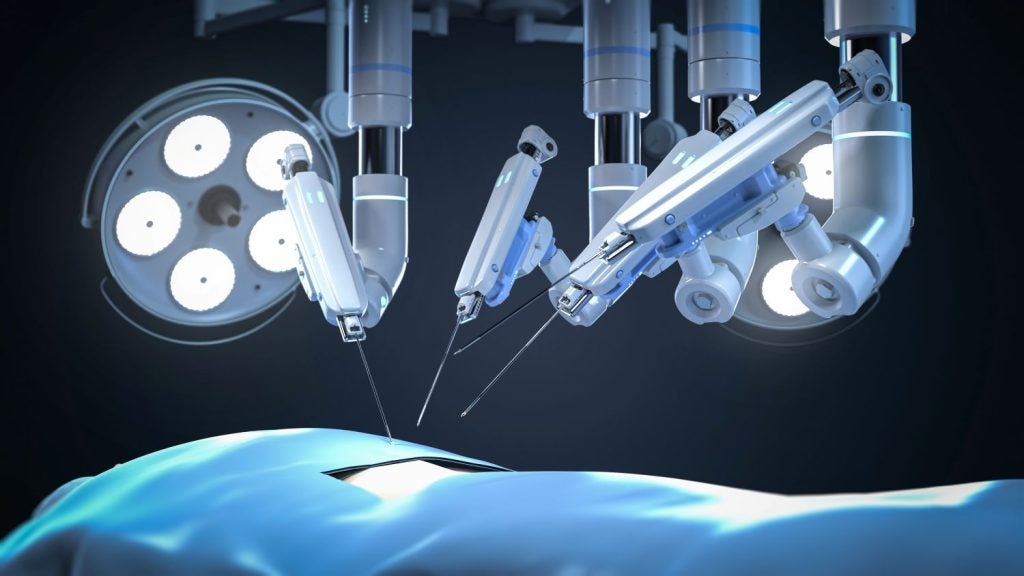
Steerability is a defining requirement in next-generation medical tools as minimally invasive procedures ramp up and expand applications. Gastrointestinal (GI), urological, cardiovascular and neurovascular procedures involve navigating the body’s most complex and delicate pathways, from the digestive tract to blood vessels and the brain. To treat conditions involving these parts of the body in minimally invasive therapies means a focus on precision, flexibility and controlled movement.
Precise torque transmission ensures rotational movements translate accurately from handle to tip, enabling controlled navigation through complex, delicate anatomies.
“The excellent torque ability of nitinol makes sure that the rotation is transmitted almost one-to-one from the proximal end to the distal end,” explains Tom Schmid, global product manager at Alleima. For clinicians, this means enhanced tactile feedback and precise directional control, even in highly confined environments.
This is particularly critical in neurovascular procedures that navigate brain vessels. Even minor deviations can lead to consequences creating unplanned emergencies. Nitinol’s combination of flexibility and responsiveness enables safer access to these regions. Atraumatic navigation is another key benefit, and unlike stiffer materials, nitinol minimises the risk of soft-tissue damage.
Similar benefits also apply to GI procedures. Navigating complex anatomical angles, such as during ERCP, requires instruments like guidewires that can bend sharply without exerting excessive force. Nitinol’s elastic behaviour enables this balance between flexibility and control.
The role of nitinol in robotic integration
The need to navigate complex anatomies with high precision in these areas of medical care is driving innovation in robotic-assisted systems that enhance control, stability and repeatability beyond manual techniques. For example, in GI procedures, robotic systems, such as the da Vinci Surgical System, are already well established, and flexible endoscopic robotics are gaining traction. In vascular interventions, platforms such as the CorPath GRX are enabling more precise, remote catheter manipulation. In neurovascular care, adoption is still emerging, but early clinical use in stroke intervention is showing strong potential.
“This rise in surgical robotics is accelerating demand for materials that can withstand repeated mechanical stress while maintaining this precision. This is where nitinol’s fatigue resistance and elasticity make it particularly well-suited,” Schmid explains.
“Furthermore, robotic systems require instruments capable of articulating through complex angles without losing responsiveness. Nitinol’s consistent force profile addresses a key limitation of traditional materials.
“With nitinol, you can make sure that you always apply the same force required. There’s no deviation. This consistency improves control and reduces the risk of tissue damage, while also easing the physical burden on clinicians,” he adds.
As micro-robotics advances, the integration of nitinol into flexible robotic architectures is expected to expand, enabling new levels of dexterity in minimally invasive procedures.
Mastering nitinol: Why OEMs choose specialist partners
Nitinol’s super-elasticity and shape memory are also what make it difficult to process consistently at scale. Even minor variations in composition or thermal handling can lead to significant changes in behaviour, affecting everything from flexibility to fatigue resistance.
Temperature sensitivity and porosity pose ongoing challenges during joining and processing. Shape setting is a critical step in defining device performance, requiring tightly controlled conditions, while batch-to-batch consistency must be carefully managed to avoid variability in clinical outcomes.
This complexity is compounded by the demands of next-generation devices: as new instruments integrate sensing and robotic compatibility, the number of critical interfaces increases. OEMs must ensure that each component performs individually and that the system behaves predictably as a whole. For many, this has made vertically integrated in-house development increasingly difficult to justify, both in terms of cost, risk and time.
Alleima’s credentials and heritage in medical nitinol processing make the Swedish firm a key partner for OEMs developing steerable instruments like guidewires that must snake through human anatomy through the narrowest of places.
Alleima brings close to three decades of experience in nitinol processing, braiding, shape setting and advanced joining techniques. Their medical business unit combines this expertise with the potential to implement ultra-fine wire-based sensor integration technology, which is increasingly relevant as devices evolve towards hybrid architectures that integrate mechanical performance with real-time data acquisition.
As micro-robotics continues to evolve, nitinol is set to remain a cornerstone of innovation with its unique combination of flexibility, durability and programmability. To find out how Alleima can help you get the most out of nitinol’s potential, download the whitepaper below.