
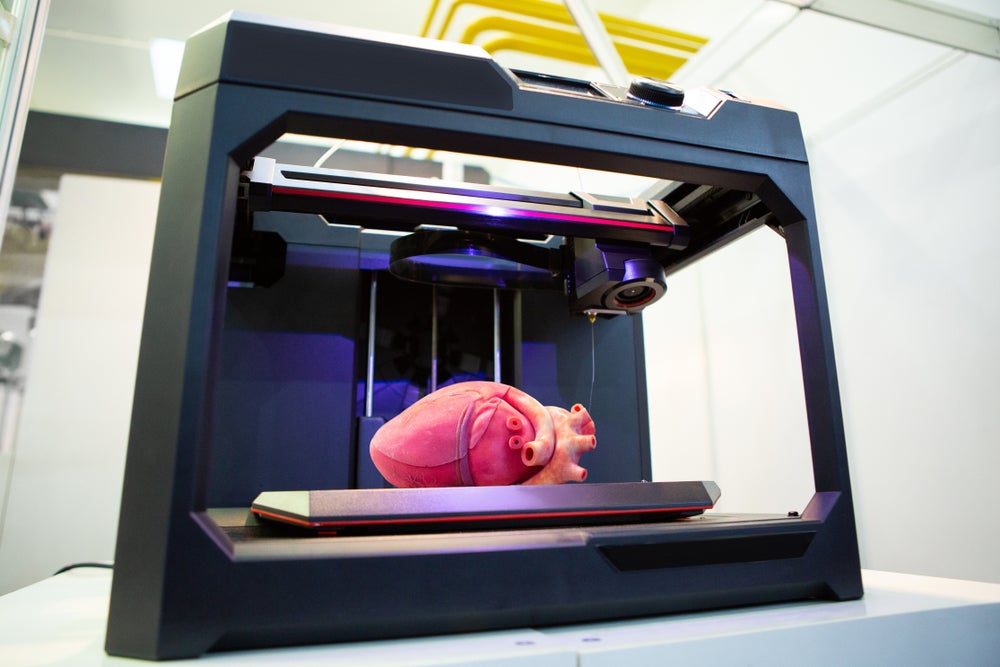
Work done by researchers at the University of Birmingham could help the long waiting times for organ transplantation by using 3D bioprinting. Along with partners at the University of Huddersfield and Polytechnic University of Milan, the team says its research will speed up adoption of microfluidic-based tissue.
3D bioprinted organs aren’t yet available as a healthcare provision but research has been going for many years. There is industry positivity about its cost and affordability, but one major hurdle has been achieving body tissue match.
Go deeper with GlobalData


Discover B2B Marketing That Performs
Combine business intelligence and editorial excellence to reach engaged professionals across 36 leading media platforms.
Microfluidic tissue may be able to overcome but current methods, according to the University of Birmingham, are expensive and labour-intensive to manufacture. Now, a manufacturing pipeline developed by the team will cut costs and speed up wider adoption of microfluidic-based 3D bioprinting. Dr Amirpasha Moetazedian, lecturer in Medical Engineering at University of Huddersfield said that reducing costs could open a range of applications for microfluidic devices.
Gowsihan Poologasundarampillai, Associate Professor in Biomaterials and Biomanufacturing at the University of Birmingham outlines the advantages of the technology.
“The new manufacturing pipeline combines additive manufacturing with innovative design approaches to simplify and advance high-value manufacturing, whilst reducing the production cost by few folds,” said Poologasundarampillai.
“Advantages of our technology include rapid integration of modular microfluidic components such as mixers and flow-focusing capability, highlighting the flexibility and versatility of our approach,” he added.


