
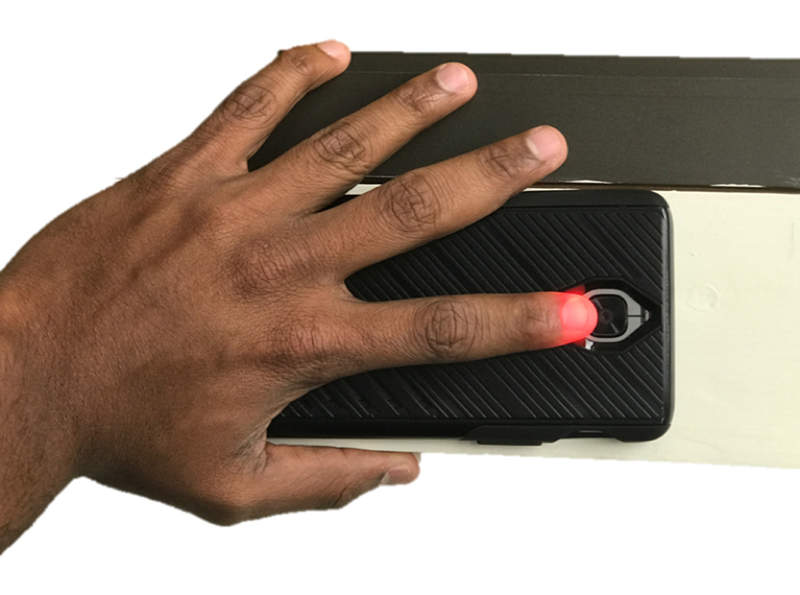
A research team at Rice University in the US is set to develop wearable, mini microscopes for the non-invasive diagnosis and monitoring of around 100 health conditions at point-of-care.
Intended for in-vivo, three-dimensional (3D) bioimaging, the new devices will employ on-chip illumination and sensing to point a camera and see through the skin, eliminating the need for a biopsy or blood test.
Go deeper with GlobalData


Discover B2B Marketing That Performs
Combine business intelligence and editorial excellence to reach engaged professionals across 36 leading media platforms.
The National Science Foundation has provided a $10m grant to support the research through its Expeditions in Computing programme.
Rice University professor and principal investigator Ashutosh Sabharwal said: “Expeditions supports transformative research, and our goal is to create miniaturised, light-based microscopes for use in wearables, point-of-care, bedside diagnostics, ambulances, operating rooms, and more.”
Including investigators from Rice, Carnegie Mellon, Harvard, MIT, and Cornell, the team will use the computational scattergraph method to address challenges with visible light scattering, which makes it unsuitable for medical imaging.
The researchers intend to reverse-engineer the scattered light’s path by using mathematical algorithms, camera design, and imaging sensors.
According to Rice co-investigator Ashok Veeraraghavan, the goal of the team is to ‘de-scatter’ the light.
It is expected that the new technology will help in monitoring and diagnosing numerous conditions, including the continuous measure of white blood cell count and wireless data transfer to the oncologist’s office, assisting chemotherapy patients in avoiding blood draw every week.
Sabharwal further added: “If we succeed, this isn’t just one product. It’s a platform technology that will be able to spinoff into many products that can be used in the care of nearly 100 health conditions.”


