
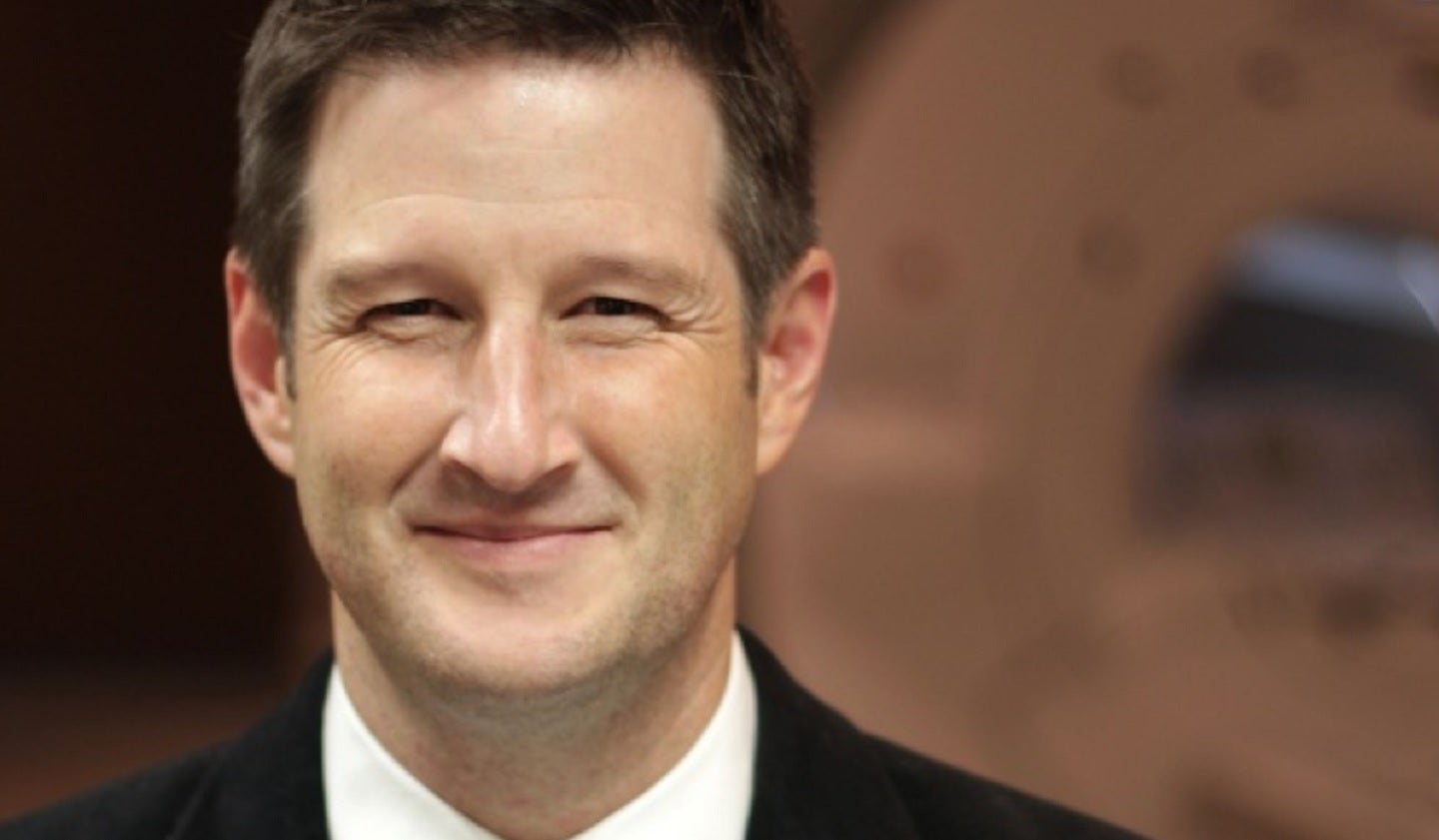
A professor from Dalhousie University in Canada will secure a grant of approximately $280,000 for his latest research work on MRI technologies.
Dr Steven Beyea will receive funding from the Natural Sciences and Engineering Research Council of Canada (NSERC) Discovery programme.

Discover B2B Marketing That Performs
Combine business intelligence and editorial excellence to reach engaged professionals across 36 leading media platforms.
Over a period of five years, the funding will be used to support the graduate and undergraduate students working in Beyea’s lab.
Beyea, who will have held NSERC Discovery funding for 25 successive years by the end of this grant, is working on a project to optimise MRI technologies in order to improve the diagnosis quality for patients.
In an interview, Beyea said: “There’s a tendency to think that a diagnostic image from an improved technology is better healthcare, but those two don’t always equate.”
He carried out trials that showed the varying quality of radiologists’ images from MRI scans.
Each of these images was ranked by the participants on how confident they were in making a diagnosis.
Based on these results, the research found that, in some cases, a better MRI image can improve the confidence of a diagnosis from the radiologist.
However, in other cases, it makes no difference. The radiologist makes the diagnosis with the same degree of assurance as that of a less detailed image.
Beyea said: “There are methods that exist for objectively, quantitatively saying this image is better quality than this one… but the issue is that they were developed for natural photographs.
“If you and I were to look at some of these MRI images, we likely would not do a great job predicting what a radiologist thinks of the clinical quality of that image.”
Furthermore, the research is focusing on using AI and ‘deep learning’ techniques to improve the quality of the images, at a faster rate compared to current technology. It is also expected to help in providing a clearer and less distorted image.


