
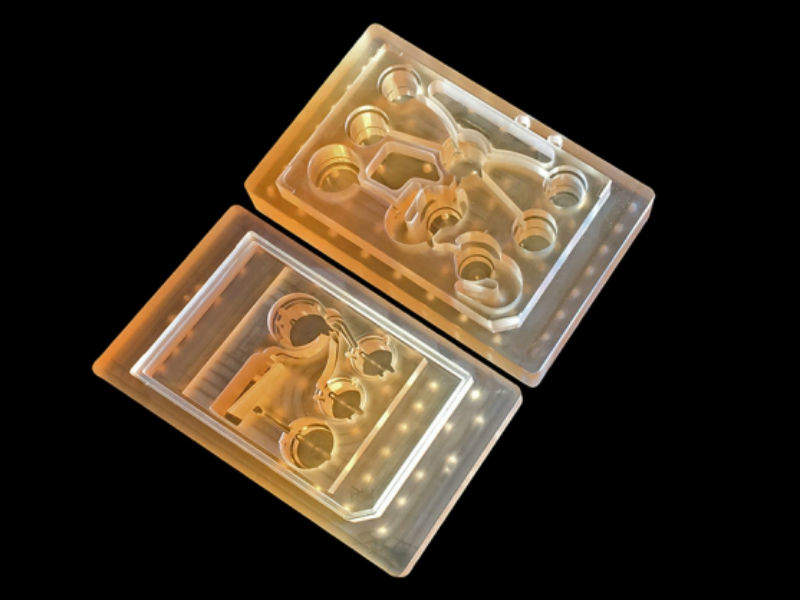
Engineers at Massachusetts Institute of Technology (MIT) in the US have developed a chip device able to carry tissues extracted from up to ten organs which they will use to test new drugs and their effect on the human body.
The body-on-a-chip/physiome-on-a-chip device is integrated with microfluidic channels that are linked to mimic interactions between various organs.
Go deeper with GlobalData


Discover B2B Marketing That Performs
Combine business intelligence and editorial excellence to reach engaged professionals across 36 leading media platforms.
Researchers expect that the chip could be used as an alternative to animal testing which can be inaccurate when testing medications designed specifically to target human immune systems, such as antibody drugs and immunotherapies.
The device is also intended to help in determining the different side-effects that a drug can have on different organs. This can be difficult to identify when using preclinical models.
MIT School of Engineering professor Linda Griffith said: “Some of these effects are really hard to predict from animal models because the situations that lead to them are idiosyncratic.
“With our chip, you can distribute a drug and then look for the effects on other tissues, and measure the exposure and how it is metabolised.”
In order to develop a precise and rapid model, the researchers created an open microphysiological system (MPS) and incorporated onboard pumps along with microfluidic systems.
These pumps are intended to control liquid flow between the ‘organs’ to reproduce the blood circulation, immune cells and proteins seen in the human body. They additionally enable evaluation of larger engineered tissues such as tumours within an organ.
The MPS can model ten organ types – liver, lung, gut, endometrium, brain, heart, pancreas, kidney, skin, and skeletal muscle, which contain one to two million cells each.
While the tissues cannot exactly replicate a complete organ, they are said to perform a majority of the important functions.
Using these models, the researchers were able to determine the path a drug takes and its metabolism inside the human body, as well as its effect on various tissues.
Currently, Griffith and her team are developing a model system with brain, liver and gastrointestinal tissue to research how gut bacteria impact the development of Parkinson’s disease.


