
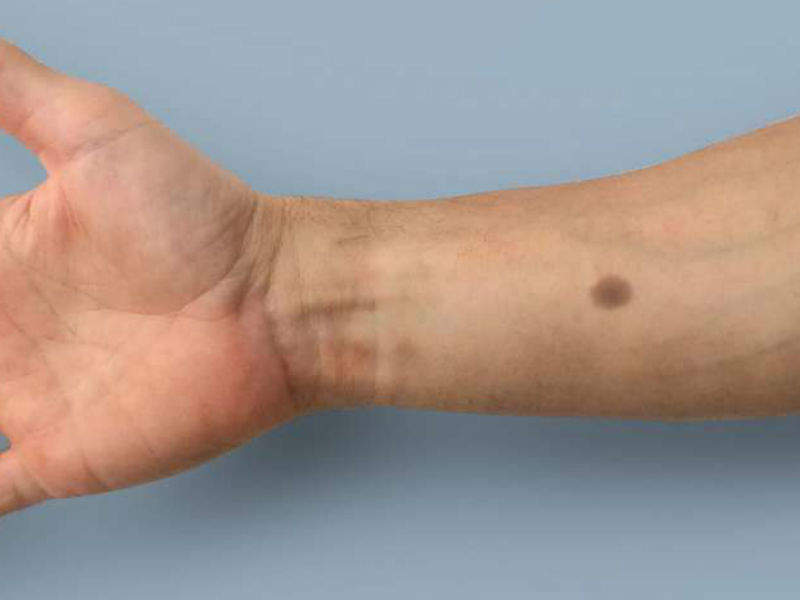
A team of researchers from ETH Zurich in Switzerland has created a synthetic gene network that can be implanted into the body and act as an early warning system for cancer by appearing as a visible mole should the patient develop a tumour.
ETH Zurich professor of biotechnology Martin Fussenegger at the department of biosystems science and engineering led the team that created the device, which can recognise the four most common types of cancer: prostate, lung, colon and breast cancer. It detects the disease at a very early stage by constantly monitoring the blood calcium level of a patient as calcium levels are elevated by developing tumours.
Go deeper with GlobalData


Discover B2B Marketing That Performs
Combine business intelligence and editorial excellence to reach engaged professionals across 36 leading media platforms.
The implant consists of a genetic network that biotechnologists integrate into human body cells. They then insert these cells into an implant which is placed under the patient’s skin where it can begin monitoring the blood calcium level. Calcium was chosen as the indicator as it is strongly regulated in the body.
If calcium levels exceed a certain threshold value over a long period of time, a signal cascade is triggered which initiates the production of melanin in the genetically modified cells inside the implant. A visible brown mole will then appear on the patient’s skin. The artificial mole is intended to appear long before cancer becomes detectable through conventional diagnosis and should be shown to a health care professional for further evaluation.
The researchers have stressed that an appearance of the artificial mole is not a reason to panic as it simply means that medical opinion and potential treatment should be sought.
Fussenegger said: “Early detection increases the chance of survival significantly. Nowadays, people generally go to the doctor only when the tumour begins to cause problems. Unfortunately, by that point it is often too late.”
In the case of breast cancer, if it is detected early the chance of patient recovery is 98%. However, those diagnosed late have a one in four chance of recovery.
The implant is cost effective due to the self-monitoring aspect, and comes with an option of producing a mark that is only visible under a red light. Testing for this mark could be regularly carried out by a doctor for those patients who are afraid of spotting the mole themselves.
However, the service life of the implant is limited as the researchers have found that encapsulated living cells only live for around a year.
So far, the early warning system has been tested on a mouse model and on pig skin. It functioned reliably during these tests but the researchers have a long way to go before testing the implant on humans as funds for clinical trials are not yet available. Fussenegger estimates that bringing the device to market maturity will take at least ten years of research and development.
The concept of the implant could also be applicable to other gradually-developing illnesses, such as neurodegenerative diseases and hormonal disorders, if the molecular sensor was changed to measure other biomarkers.


