
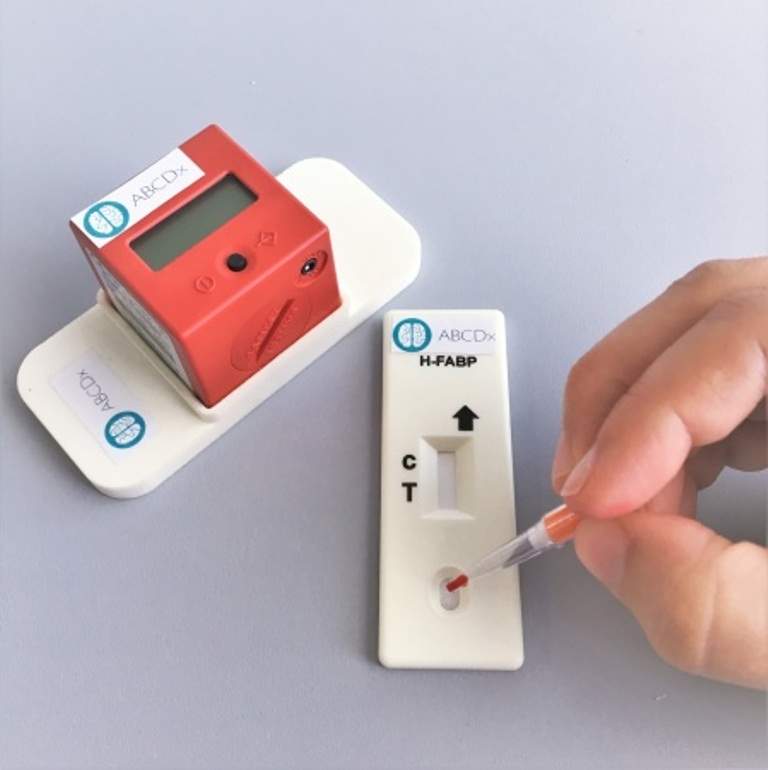
Researchers from the University of Geneva (UNIGE), in collaboration with the Hospitals of Barcelona, Madrid and Seville, have developed a diagnostic test that measures mild traumatic brain injury with just a drop of blood.
Currently, a CT scan is the only suitable approach to diagnose mild traumatic brain injury; however, this equipment is not available in every hospital. Furthermore, CT scans are expensive and expose patients to radiation.
Go deeper with GlobalData


Discover B2B Marketing That Performs
Combine business intelligence and editorial excellence to reach engaged professionals across 36 leading media platforms.
This new portable device Point-of-Care Test (POCT) offers an alternative to CT scan in identifying mild trauma in brain injury patients within just ten minutes.
When the head receives a shock, some cells in the brain get damaged and consequently high levels of proteins are released, which eventually stream into blood.
To develop the device, researchers at UNIGE and Spanish hospitals compared the blood of patients suffering with mild traumatic brain injury with that of those having brain lesions.
Through proteomic analyses, which can quantify thousands of proteins at the same point of time, researchers could find variations in the levels in the blood, following which they isolated four molecules indicating the presence of a brain injury: H-FABP, Interleukin-10, S100B and GFAP.
UNIGE Department of Internal Medicine of Specialties and the Biomarkers Centre of the Faculty of Medicine professor Jean-Charles Sanchez said: “We wondered if it was possible to isolate certain proteins whose presence in the blood increases in the event of mild traumatic brain injury”
“Our idea was to find a way to do a quick examination that would allow, during a boxing or American football match, for example, to determine whether the athlete can return to the field or if his condition requires hospitalisation.”
Drawing inspiration from the idea of pregnancy testing, the Geneva and Spanish researchers developed the rapid diagnostic test (POCT), called TBIcheck, to measure if the level of one of the molecules such as H-FABP is higher than 2.5 nanograms per millilitre of blood.
Jean-Charles Sanchez said: “If a line appears, the injured person must go to a hospital for a CT scan, if there is nothing, he can go home safely!”
The device could be useful for patients in rough terrains or inaccessible environments where transport to a hospital for a CT-scan becomes difficult.
It will be marketed by ABCDx from next year.


