
HeartBeam has received the Innovation Award in the Remote Cardiac Diagnostics category in the 2025 Medical Device Network Excellence Awards, for developing a portable, high-fidelity cardiac monitoring system designed to enable clinical-grade diagnostics outside of traditional healthcare settings. HeartBeam’s technology addresses key challenges in remote cardiac care by providing a practical solution for timely and comprehensive arrhythmia assessment.
The Medical Device Network Excellence Awards honor the most significant achievements and innovations in the medical devices industry. Powered by GlobalData’s business intelligence, the Awards recognize the people and companies leading positive change and shaping the future of the industry.
Go deeper with GlobalData


Discover B2B Marketing That Performs
Combine business intelligence and editorial excellence to reach engaged professionals across 36 leading media platforms.
HeartBeam’s novel solution that won the award addresses key challenges in remote cardiac care, setting a new benchmark for timely and accessible arrhythmia assessment.
Advancing at-home arrhythmia assessment with 3D ECG technology
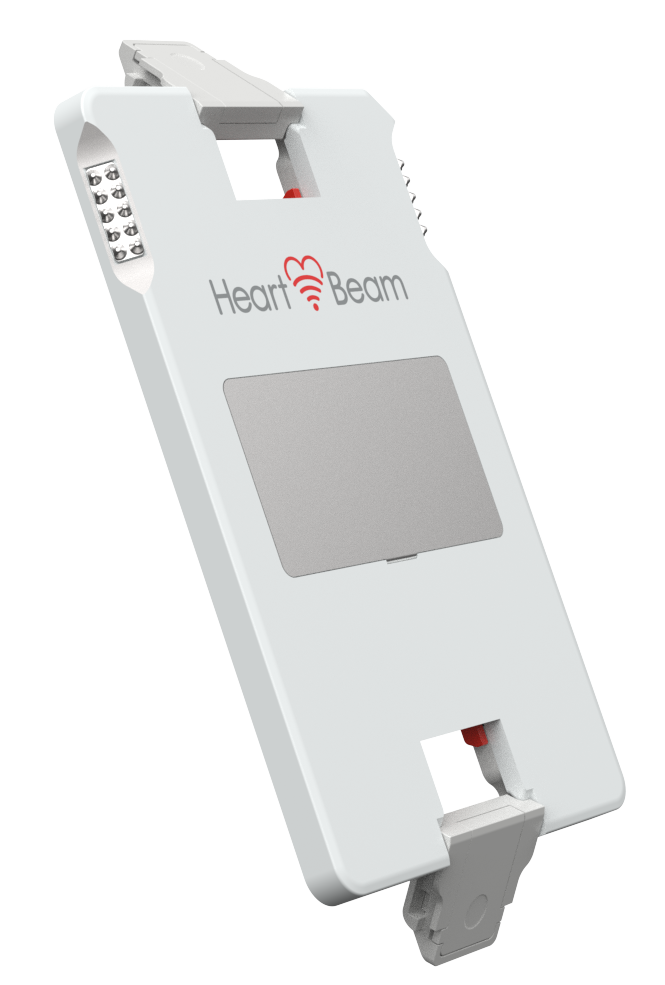
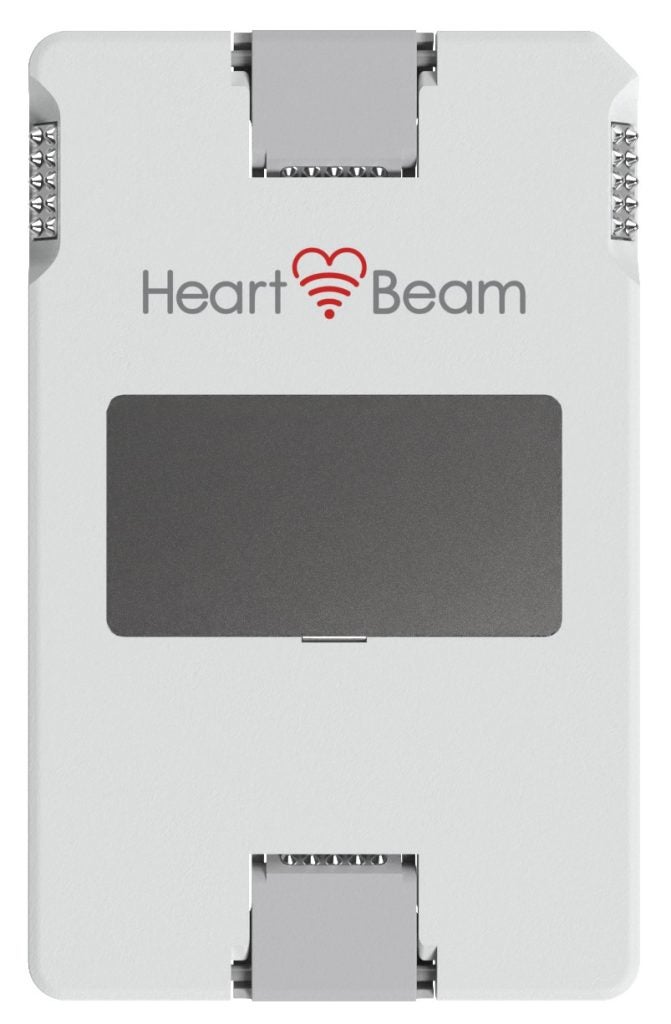
HeartBeam’s core innovation lies in its development of a cable-free, credit card-sized device that captures the heart’s electrical activity from three distinct, non-coplanar directions. This 3D ECG technology enables the synthesis of a full 12-lead ECG—a diagnostic standard in cardiology—using a personalized transformation matrix. The result is a portable device that patients can carry with them and use whenever they experience symptoms, without the need for wires, external electrodes, or clinical supervision.
This approach directly addresses the limitations of current consumer wearables, such as smartwatches, which typically provide only single-lead ECGs. Single-lead ECGs are insufficient for detecting many types of arrhythmias, as they lack the comprehensive view provided by a 12-lead ECG. By contrast, HeartBeam’s device is designed to capture high-fidelity, multi-directional data that can be synthesized into a familiar 12-lead format, enabling the detection of a broader range of arrhythmias.

The device’s user-centric design is further supported by a patient application, which walks users through the process of placing the device on the chest and recording a 30-second ECG. Once captured, the data is securely transmitted to the cloud and made available for physician review via a dedicated portal. This workflow not only empowers patients to take immediate action when symptoms arise but also facilitates timely clinical intervention, potentially reducing the risk of adverse outcomes associated with delayed care.
HeartBeam’s technology also supports the collection of multiple ECG recordings over time, enabling the creation of a longitudinal cardiac health profile for each patient. This capability is particularly valuable for individuals with intermittent symptoms or those at risk of developing cardiac conditions, as it allows for ongoing monitoring and early detection of changes in heart health.
Clinical validation and regulatory progress
A key factor in HeartBeam’s recognition for innovation is the company’s commitment to rigorous clinical validation and regulatory compliance. The system’s performance has been evaluated in pivotal studies, including the VALID-ECG trial, which enrolled 198 patients across five US clinical centers. In this study, HeartBeam’s synthesized 12-lead ECG demonstrated a 93.4% overall diagnostic agreement with simultaneously recorded standard 12-lead ECGs for arrhythmia detection. This high level of concordance is comparable to the agreement typically observed between two expert physicians interpreting the same ECG, underscoring the reliability of HeartBeam’s technology for remote diagnostics.
Further supporting its clinical utility, HeartBeam’s technology has shown similar performance to standard 12-lead ECGs in detecting a range of arrhythmias, including sinus rhythm, atrial fibrillation, atrial flutter, and premature ventricular or atrial contractions. In a pilot study presented at the American Heart Association Scientific Sessions, the device achieved a sensitivity of 94% and a specificity of 100% for arrhythmia detection, reinforcing its diagnostic accuracy.
In December 2024, HeartBeam achieved a significant regulatory milestone with foundational FDA 510(k) clearance for its system, which includes the signal collection device, patient-facing application, physician portal, and signal quality algorithms. This clearance validates the safety and efficacy of the system for arrhythmia assessment and establishes a regulatory foundation for future product enhancements. Notably, HeartBeam has also submitted an application for FDA clearance of its 12-lead ECG synthesis software, which is currently under review. This software is designed to convert the device’s 3D signals into a synthesized 12-lead ECG, further aligning the system’s outputs with established clinical workflows and physician expectations.
HeartBeam’s regulatory achievements are complemented by a robust intellectual property portfolio, with over 20 issued US and international patents. This strong IP position not only demonstrates the novelty of the company’s approach, but also provides a defensible foundation for ongoing innovation and market leadership in remote cardiac diagnostics.
Future indications and AI integration for enhanced cardiac insights

Additionally, HeartBeam’s technology is being evaluated for remote heart attack risk assessment. In a feasibility study, the company’s proprietary algorithm was able to calculate a heart attack risk score from remotely collected ECG data, with accuracy comparable to assessments made by emergency department physicians using standard 12-lead ECGs. This future capability has the potential to further reduce delays in providing care for patients experiencing chest pain outside of medical facilities. This use is not currently approved, but the company plans to pursue this indication with the FDA in the future.
HeartBeam’s future innovation extends beyond hardware and signal acquisition to include advanced artificial intelligence (AI) algorithms designed to enhance diagnostic accuracy and consistency. The company’s AI program leverages deep learning techniques to analyze data derived from the device’s 3D ECG signals. In recent studies, HeartBeam’s AI demonstrated superior performance in detecting arrhythmias, particularly atrial flutter, when compared to panels of expert electrophysiologists.
For example, in a feasibility study presented at the Heart Rhythm Society conference, HeartBeam’s AI combined with HeartBeam’s ECG signals achieved a sensitivity of 97.3% for atrial flutter detection, outperforming both single-lead ECG analysis and expert review of standard 12-lead ECGs. The AI also exhibited zero variability in its assessments, addressing a common challenge in clinical practice where interobserver differences can impact diagnostic outcomes.
The integration of AI not only will improve the reliability of arrhythmia detection, but also support the development of predictive analytics. By analyzing a series of high-fidelity ECG recordings collected over time, HeartBeam’s platform will be able to provide physicians with a longitudinal view of a patient’s cardiac health. This data-rich approach opens the door to early identification of deteriorating heart conditions, silent cardiac events, or risk factors that might otherwise go unnoticed with traditional, episodic testing.
Through the combination of advanced signal acquisition, clinical validation, and regulatory clearance, HeartBeam’s platform represents a comprehensive solution for remote arrhythmia assessment. The company’s ongoing commitment to innovation is reflected in its plans for future product enhancements, including new indications and expanded AI capabilities, all supported by a strong intellectual property foundation.

“HeartBeam’s vision is to make it easier for patients and physicians to monitor and diagnose cardiac symptoms outside of a medical facility. It’s an honor to be recognized for our groundbreaking technology that provides a simple way for patients to capture high-fidelity ECG signals wherever they are when symptoms occur to minimize any delays in care.”
– Rob Eno, Chief Executive Officer
Company Profile

HeartBeam, Inc. (NASDAQ: BEAT) is a medical technology company dedicated to transforming the detection and monitoring of critical cardiac conditions. The Company is creating the first-ever cable-free device capable of collecting ECG signals in 3D, from three non-coplanar directions, and synthesizing the signals into a 12-lead ECG. This platform technology is designed for portable devices that can be used wherever the patient is to deliver actionable heart intelligence. Physicians will be able to identify cardiac health trends and acute conditions and direct patients to the appropriate care – all outside of a medical facility, thus redefining the future of cardiac health management. HeartBeam’s 3D ECG technology received FDA clearance for arrhythmia assessment in December 2024. The Company holds over 20 issued patents related to technology enablement. For additional information, visit HeartBeam.com.
Links
Video: https://vimeo.com/1039098793
Website: https://www.heartbeam.com/


