
Researchers from Peter the Great St. Petersburg Polytechnic University (SPbPU) in Russia have developed medical polymeric materials that can repair damaged human organs and tissue.
The new development is part of Project 5-100 at the university’s Polymer Materials for Tissue Engineering and Transplantology Laboratory.
Go deeper with GlobalData


Discover B2B Marketing That Performs
Combine business intelligence and editorial excellence to reach engaged professionals across 36 leading media platforms.
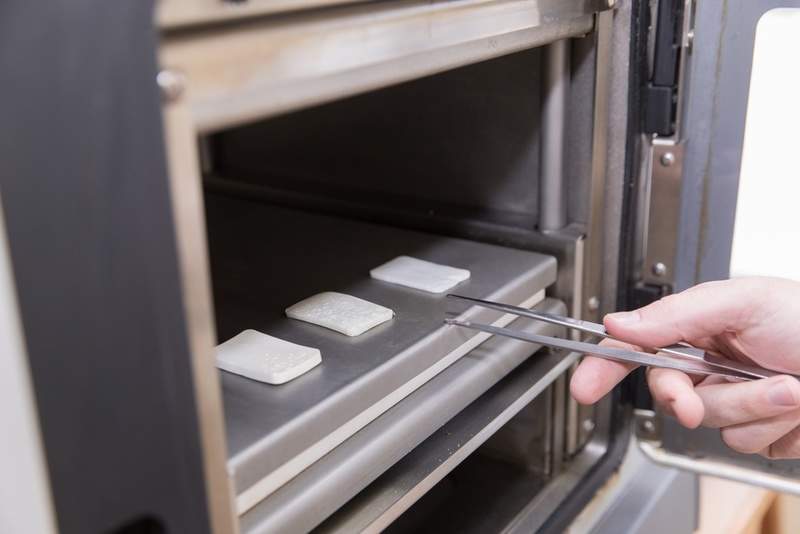
Made using collagen and a bone tissue’s analogue called chitosan, the three-dimensional porous materials can be used to restore bone parts lost during trauma or illness.
The polymer matrix of the new materials will be saturated with the cells of organs that are to be repaired. It is then implanted into the corresponding damaged tissue.
As chitosan and collagen are biocompatible, the body does not consider the polymer as a foreign material and will not reject it. The matrix decomposes over time and the artificial tissue is replaced by a natural one.
Polymer Materials for Tissue Engineering and Transplantology Laboratory head Vladimir Yudin said: “Experts are currently debating whether it is better to use an implant or restore an organ.
“A person with an artificial organ must take medication for the rest of their lifetime to prevent the body from rejecting it. This is not the case for tissue grown from human cells.”
The researchers also regulated the resorption time of the polymeric materials to ensure that the implant does not disintegrate prior to the formation of the new, natural tissue.
In pre-clinical studies, a three-dimensional collagen sponge containing the new material was found to decompose as natural bone tissue starts covering the material, after a certain duration.
When studied in liver and muscle tissues, the sponge demonstrated a capability to trigger restoration of the natural tissue of the organs.
In addition, the researchers also developed and studied wound covers, blood vessel prostheses and suture threads. In-vivo pre-clinical trials showed the polymeric materials to be effective.


