

Selective serotonin reuptake inhibitors (SSRIs) are considered the first-line, gold standard treatment for depression. However, their use is not without limitations, with commonly reported side effects including weight gain, sleep disturbance, and in a minority of cases, suicidal ideation – particularly in younger populations.
While the majority of patients experience symptom improvement with SSRIs, a substantial subset are classified as having treatment-resistant depression (TRD), a form of major depressive disorder (MDD) that fails to adequately improve after patients have tried at least two different antidepressant medications at standard doses and duration.

Discover B2B Marketing That Performs
Combine business intelligence and editorial excellence to reach engaged professionals across 36 leading media platforms.
Against this backdrop, neuromodulation-based medical devices are establishing a role as an alternative modality in the depression treatment landscape. According to GlobalData analysis, the global neuromodulation device market is projected to reach a valuation of over $13bn in 2035, up from around $6.8bn in 2025.
Transcranial magnetic stimulation (TMS) has emerged as one of the most established device-based therapies in this space. Neuronetics’ NeuroStar TMS therapy system became the first device to receive US Food and Drug Administration (FDA) clearance for treating MDD in 2008.
Since NeuroStar’s clearance, others have followed, with FDA clearance for BrainsWay’s Deep TMS in 2013, and Stanford University’s SAINT (Stanford Accelerated Intelligent Neuromodulation Therapy) TMS system in 2022.
Meanwhile, other medical device-based depression treatments in development include focused ultrasound (FUS) and deep-brain stimulation (DBS). In depression, these therapies aim to replace medication-based approaches or serve as an adjunct when pharmaceuticals prove ineffective.
In parallel with technological development, care delivery models are evolving. Radial Health is developing a nationwide network of interventional psychiatry clinics in the US focused on evidence-based treatments for depression, aiming to highlight and support patients in gaining access to non-pharmacologic treatments.
To mark mental health awareness month, Medical Device Network spoke with Radial’s CMO, Owen Muir, to explore how device-based interventions such as TMS may reshape the future treatment paradigm for depression.
This interview has been edited for length and clarity.
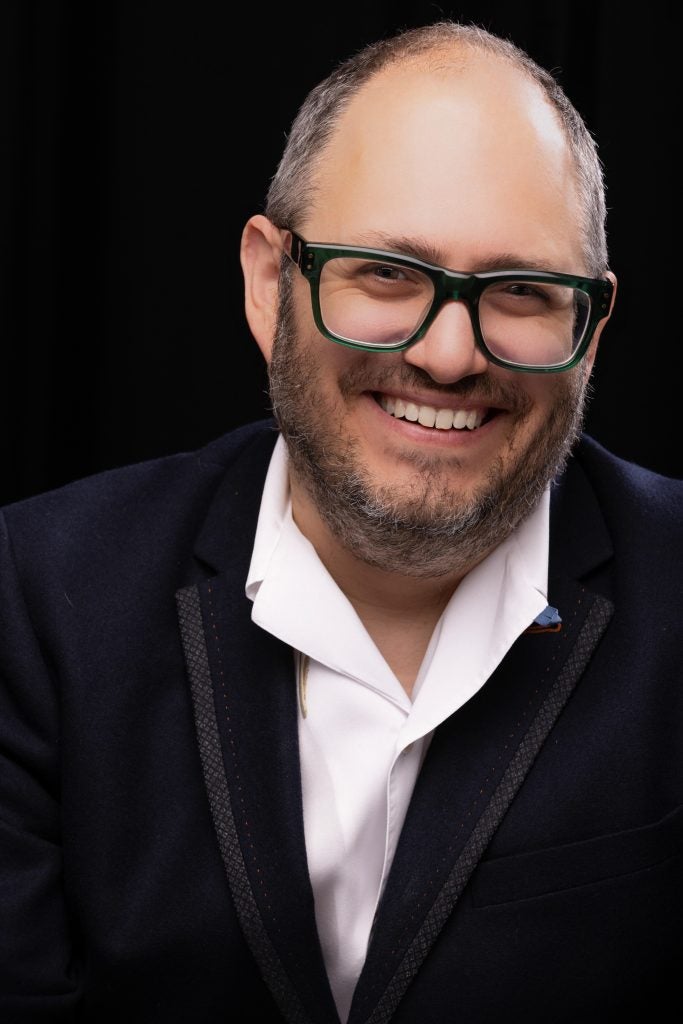
Ross Law (RL): Please explain more about the rationale behind Radial.
Owen Muir (OM): Radial is bringing brain medicine to scale. When thinking about mental health, our brains control all the output that emanates from disorders such as depression, anxiety, and PTSD. Some of that is movement, some is mood, some is speech, but the common link is that these are all disorders of brain circuits.
At Radial, we treat brain circuit disorders, and as in other emergent fields such as sleep medicine, when we have a new set of tools in medicine that require sub-specialists from multiple disciplines to work together, you have a new medical discipline, and for mental health, Radial is positioned as a company that aims to bring brain medicine in a format that patients can more readily gain access to.
RL: What are the first steps in moving away from SSRIs as a first-line treatment for mental health?
OM: The first thing to look at is the data, considering whether SSRIs work, and what do we mean by work? If I told you I’m going to roll you into the OR and fix your broken leg, and it’ll work, the first time we do the operation, 30% of the time. That would mean 70% of people are going to come in for another operation, and that one will only work 5% of the time, but we’re going to keep going until either your leg snaps off or we get it right, and by the way, you’ll limp forever. This is effectively the standard of care (SoC) in psychiatry as a discipline if you only use oral medications with limited effectiveness.
And this is not even a case of trial and error because we know it’s not going to work. This situation is more like gambling in a casino where the odds are bad. For our patients, we’re playing to get them well, and to relieve their suffering, more often than not, and with fewer side effects. You shouldn’t be satisfied with things that don’t work, or alternatively, hurt people more than the illness does. And I think we’re in a similar place with the data around SSRIs.
RL: Discuss the medical device treatments available for depression. Which treatment modalities are proving to be most efficacious?
OM: My favourites are the ones that get an individual patient well and relieve them of their depression. In this endeavour, we’re trying to engage brain circuits, and one protocol we offer at Radial is TMS. TMS is like an external pacemaker for the brain circuits, but what brain circuits to target, and in what patterns and at what dosage, are all crucial questions regarding an individual patient’s optimal treatment regimen.
The best treatment is fundamentally the one that’s highly likely to get patients well and highly unlikely to hurt them, and ideally, these are treatments that are quick, convenient, inexpensive, and accessible. Beyond TMS, other patients may respond better to modalities including external combined trigeminal and occipital afferent nerve stimulation or DBS to provide continuous stimulation to brain circuits that are misfiring.
RL: How do we shift towards progressing medical device-based depression treatments towards becoming the standard of care?
OM: There are several things that need to be gotten right, including a reliable business model. First, medical devices need to be paid for. People also need to have heard about them, and the evidence needs to be strong and presented to patients as a standard option.
My feeling is that when told about the outcomes of any of these treatment modalities [such as TMS], most patients would say yes in a heartbeat. For instance, in a trial of BrainsWay’s SWIFT deep TMS, 78% of patients achieved full remission after one month of therapy, with close to no side effects.
Another point to raise is that for patients who experience suboptimal effects with antidepressants, it is likely that a clinician will prescribe further drugs to augment the response to the antidepressant. A common add-on for MDD is aripiprazole (Abilify), an antipsychotic medication that is intended to help balance dopamine and serotonin in the brain. However, Abilify can result in side effects including weight gain, metabolic syndrome, diabetes, and a movement disorder called tardive dyskinesia. That isn’t a good deal when you could just use something that won’t do any of that, and so one of the trade-offs in starting an antidepressant is that it starts a cascade of inevitable choice points that can get worse and worse for some patients.


