
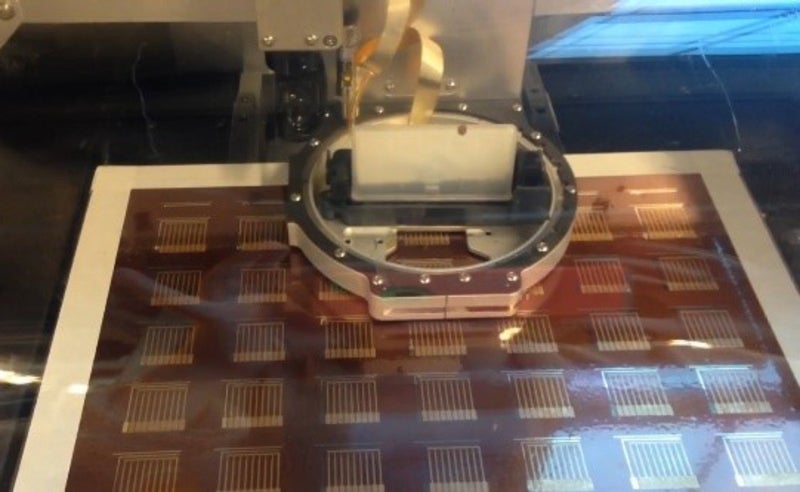
A research team funded by the US National Institute of Biomedical Imaging and Bioengineering (NIBIB) has devised a new biosensor to diagnose breast cancer less invasively compared to the existing needle biopsy approach.
The new biosensor chip, created by researchers from the Universities of Hartford and Connecticut, is designed to identify a breast cancer biomarker called HER-2 in the blood within 15 minutes.
Go deeper with GlobalData


Discover B2B Marketing That Performs
Combine business intelligence and editorial excellence to reach engaged professionals across 36 leading media platforms.
Combining microfluidic technology and diagnostics, the device was partly built using an inkjet printer.
The printed chip, consisting of an array of electrodes, was deposited into a pre-fabricated microfluidic device that regulates fluids to flow in a controlled manner.
During the test process, a patient’s blood sample flows through the microfluidic device and the biosensor chip coated with antibodies, which then captures and immobilises HER-2 proteins present in the sample.
Abnormal levels of HER-2 is considered to be an indicator of a specific type of breast cancer, and its detection is expected to enable treatment strategies.
NIBIB Biosensors and Physiological Detectors programmes director Seila Selimovic said: “Less invasive, more accessible, and faster diagnostic tools like this biosensor are essential to improving healthcare.
“As biosensors continue to progress it is important to keep in mind diagnostic tools are only helpful when accurate. This biosensor works in the clinically relevant range and has one of the lowest reported HER-2 detection limits, so fewer false positives and negatives will occur.”
According to a report by the CDC, breast cancer is the most common form of cancer among women.
Usually, diagnosis of the disease involves a mammogram or ultrasound followed by an invasive needle biopsy, where specific biomarkers are identified to determine the type of breast cancer type and develop a treatment plan. Results from a biopsy exam take up to two weeks.
NIBIB noted recent studies demonstrating monitoring of blood HER-2 levels as a potential biomarker of disease progression status during and after therapy.
The researchers believe that the advancement of biosensors could facilitate non-invasive breast cancer testing. They are working towards reducing the new biosensor chip size by using printed circuit boards to construct a portable electrochemical unit.


