
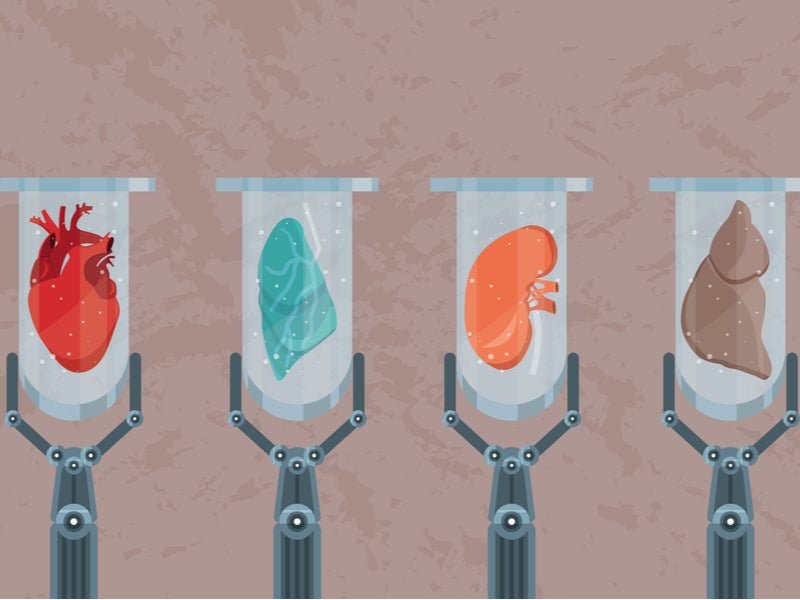
Purdue University researchers have developed a 3D mapping technology to monitor and track the behaviour of engineered tissues and cells.
The team hopes the technology will improve the success rate of cell therapies for patients who have sustained organ damage from chemotherapy, cardiovascular disease and other medical issues.
Go deeper with GlobalData


Discover B2B Marketing That Performs
Combine business intelligence and editorial excellence to reach engaged professionals across 36 leading media platforms.
Tissue engineering represents one of the fastest growing medical markets in the world and is expected to reach a value of $11.5bn by 2022. Clinicians currently face the challenge of knowing how to monitor and continuously test the performance of their lab-grown cells.
To overcome this, the Purdue team have created a tissue scaffold with sensor arrays to monitor the electrophysical activities of cells and tissues and produce 3D maps to track the activity. The device is an ultra-buoyant scaffold, which allows the entire structure to remain afloat on the cell culture medium, isolating the electronic instrument from the wet conditions inside the body.
Purdue College of Engineering assistant professor Chi Hawn Lee said: “This device offers an expanded set of potential options to monitor cell and tissue function after surgical transplants in diseased or damaged bodies. Our technology offers diverse options for sensing and works in moist internal body environments that are typically unfavourable for electronic instruments.”
During tissue engineering, scientists use a combination of cells, scaffolding and biochemical and physiochemical substances to grow new, viable tissue on a scaffold. This is then used to repair damaged tissue inside the body. This process can be carried out using cells harvested from the target organ, developed from stem cells or taken from cell lines grown in a lab – all ideally from the patient in question.
The team is now working with Purdue’s Weldon School of Biomedical Engineering to test the device in stem cell therapies, with potential applications in the regenerative treatment of diseases.
Lee said: “My hope is to help millions of people in need. Tissue engineering already provides new hope for hard-to-treat disorders, and our technology brings even more possibilities.”


