
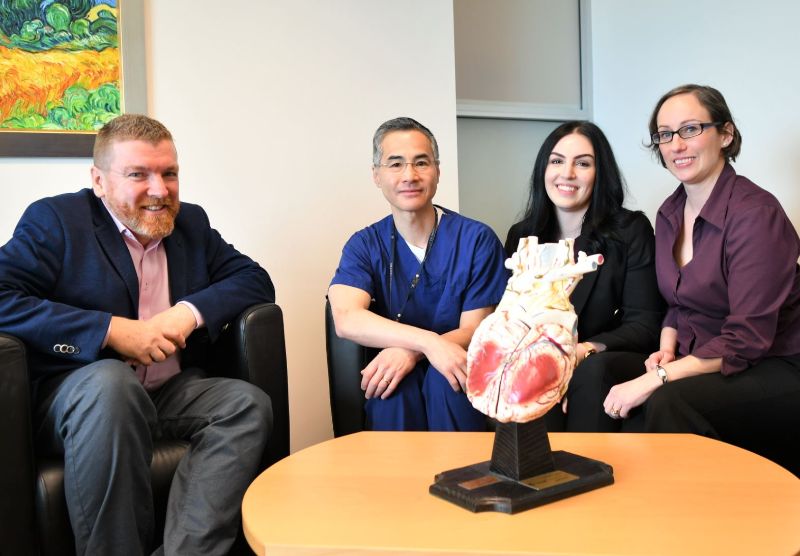
Researchers from Flinders University in Australia have conducted a new clinical trial to assess the use of a new acute coronary syndrome screening protocol using a cardiac blood test.
The RAPID-TnT trial, which is claimed to be the world’s first, was undertaken in a clinical hospital setting with a focus on a more sensitive cardiac blood test for a protein called Troponin T, combined with a faster testing protocol.
Go deeper with GlobalData


Discover B2B Marketing That Performs
Combine business intelligence and editorial excellence to reach engaged professionals across 36 leading media platforms.
Studies indicate that nearly 70% of patients visiting emergency departments in Australia due to chest pain could be safely discharged in less time compared to the existing standard protocols.
Current protocols require testing of individuals with the suspected acute coronary syndrome (ACS) upon presentation and three hours later to compare protein levels.
As part of the RAPID-TnT trial, more than 3,000 patients at four hospitals in Adelaide were randomised to 0-1 hour or 0-3 hour testing groups.
Subjects in the one-hour follow-up group spent an average of one hour less in the emergency room at 4.6 hours, compared to 5.6 hours in the three-hour follow-up group.
Also, 0-1 hour approach was associated with significantly less chance of admission into hospital, with 33.2% versus 45.5%.
While further strategies are required to improve outcomes, the new approach is expected to help significantly cut wait times and hospital admission rates.
Flinders University cardiology professor Derek Chew said: “Currently there are around 30,000 emergency department presentations for chest pain each year in South Australia, so that represents a large number of people not unnecessarily taking up a hospital bed.
“We’ve shown the one-hour follow-up protocol is safe for patients. The benefits for the system as a whole are reducing crowding in EDs and reducing unnecessary hospital admissions.”
Chew added that artificial intelligence programmes to support doctors’ decisions could aid in further decreasing the wait times and hospital admissions.


