
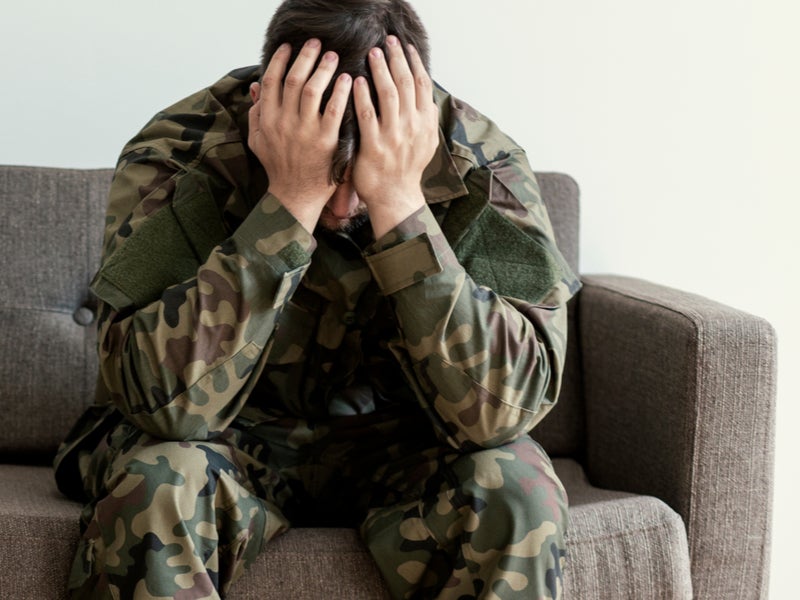
Post-traumatic stress disorder (PTSD) biomarkers have been identified in the blood samples of veterans with 77% accuracy using an artificial intelligence (AI) tool.
The study, led by New York University (NYU) School of Medicine, Harvard John A. Paulson School of Engineering and Applied Sciences, and the U.S. Army Medical Research and Development Command (USAMRDC), analysed 28 genomic, metabolic and protein biomarkers.
Go deeper with GlobalData


Discover B2B Marketing That Performs
Combine business intelligence and editorial excellence to reach engaged professionals across 36 leading media platforms.
The biomarkers with the strongest ties to PTSD included the activity levels of certain genes, amounts of key proteins in the blood, levels of metabolites involved in energy processing, and levels of circulating microRNAs.
For the study, samples were taken from 83 male, warzone-exposed veterans with confirmed PTSD, and 82 warzone-exposed veterans who did not have the condition.
The samples were then tested with current genomic and molecular tests for nearly one million features, which were narrowed down to 28 biomarkers which could be associated with an accurate PTSD diagnosis.
The data was narrowed down using input from the research team and machine learning, where the AI was trained to find data patterns.
The final PTSD blood test was applied to another independent group of veterans to see how well the new tool compared to existing questionnaire-based diagnostic tools. The comparison demonstrated an accuracy of 77%.
There are currently no US Food and Drug Administration (FDA)-approved blood tests for mental health conditions. The researchers hope the results of their work will shift mental health care towards objective measurements of symptoms and away from self-reports with inherent biases.
USAMRDC chief scientist in systems biology Dr Marti Jett said: “These molecular signatures will continue to be refined and adapted for commercialisation. The Department of Health Affairs within the Department of Defence is considering this approach as a potential screening tool that could identify service members, before and after deployment, with features of unresolved post-traumatic stress.”


