
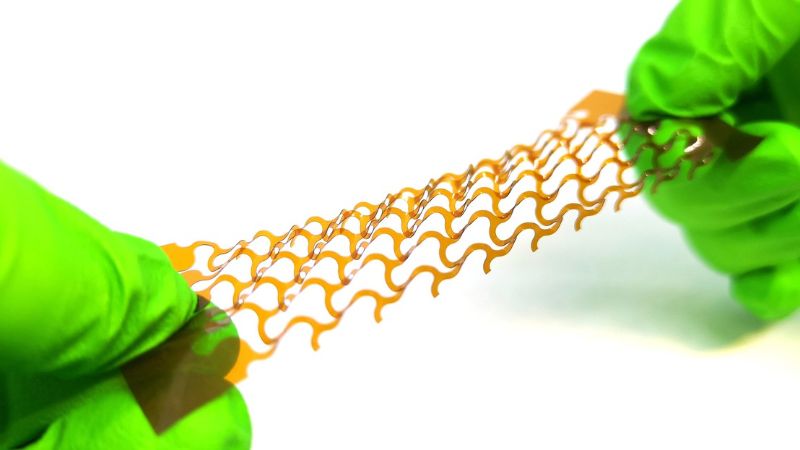
Researchers at Ecole polytechnique fédérale de Lausanne (EPFL)’s Laboratory for Soft BioElectronic Interface (LSBI) are developing a conformable, electrode implant to restore hearing in those with a dysfunctional inner ear.
The implant will provide an alternative to current auditory brainstem implants (ABIs), neuroprosthetics that deliver electrical signals directly to the auditory brainstem.
Go deeper with GlobalData


Discover B2B Marketing That Performs
Combine business intelligence and editorial excellence to reach engaged professionals across 36 leading media platforms.
Hearing impairments are commonly treated using devices such as cochlear implants. However, these implants are not suitable for people with a damaged inner ear or those with improper auditory nerve function.
Such patients can be treated with ABIs. However, the implants are associated with mixed outcomes, including the recovery of sound perception alone, said the researchers.
Furthermore, ABIs are known to be stiff and cannot accurately conform to the curvature of the auditory brainstem.
In alliance with Harvard Medical School and Massachusetts Eye and Ear clinicians, EPFL researchers developed a soft electronic interface that makes the implant elastic, allowing precise configuration to the auditory brainstem.
The configuration is expected to deliver highly targeted electrical signals.
Following successful tests in mice, the research team developed an implant ideal for human use. The form is said to be compatible with existing surgical methods.
Researchers intend to study the electrode implant towards advancement into human trials. In addition to the recovery of hearing, the device is expected to have additional uses.
LSBI researcher Stéphanie Lacour said: “The properties of our device would be of value for all sorts of implantable neuroprosthetics such as those used to stimulate or record neural activity in the spine, brain or even peripheral nerves.”
Last month, a group of EPFL researchers unveiled a prosthetic hand that uses artificial intelligence (AI) to adapt to a user’s finger movement.


