
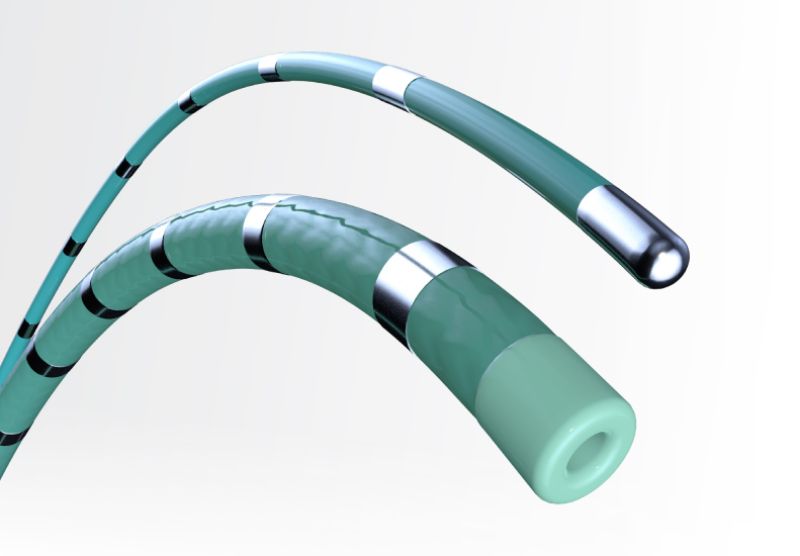
Cardiology devices developer Baylis Medical has launched its 2-French (2F) EPstar fixed electrophysiology catheter in the North American market.
The company plans to launch the catheters in the US early next year. EPstar is said to be one of the smallest diagnostic catheters in North America’s electrophysiology market.
Go deeper with GlobalData


Discover B2B Marketing That Performs
Combine business intelligence and editorial excellence to reach engaged professionals across 36 leading media platforms.
The device can be used to reach different areas of the heart to perform procedure mapping.
Typically, deeper electrophysiological examination, including mapping, is performed to diagnose complex atrial tachycardias, left Wolff-Parkinson-White Syndrome and idiopathic ventricular tachycardias.
Furthermore, the EPstar 2F catheter enables mapping and pacing in smaller structures such as the Vein of Marshall (VOM).
The catheter can be inserted via any venous access point and comes with a flexible and atraumatic tip along with low energy pacing from the distal electrode.
Miguel Valderrabano, director of cardiac electrophysiology at Houston Methodist Hospital, Texas, US, was the first to use the 2F catheter.
Valderrabano said: “Mapping of the coronary sinus is essential to determine an accurate diagnosis for several cardiac conditions. However, it becomes a challenge as you reach further into coronary sinus small branches, which cannot be reached with conventional catheters.
“The availability of a 2F catheter allows us to reach into those smaller areas of the CS and VOM, as well as the anterior interventricular vein at its small branches, to achieve an accurate diagnosis.”
In addition to the 2F device, the EPstar range comprises 6-French (6F) guiding catheter, for use in combination with deeper coronary sinus (CS) mapping.
The 6F catheter has two electrode spacing options, which allow tailoring to a particular procedure. It also consists of a fully braided shaft to offer improved torque control.
Furthermore, the device has a lumen for visualisation of coronary sinus anatomy, delivered through superior vein access.
Baylis introduced the EPstar catheters in alliance with a Japanese cardiovascular device company, Japan Lifeline (JLL). The EPstar catheters are already available in the Japanese market.
Baylis Medical president Kris Shah said: “We are proud to partner with JLL to bring this innovative device to the North American market, so that, together, we can continue working towards improved patient care. We look forward to continuing our strong relationship in the years ahead.”


