
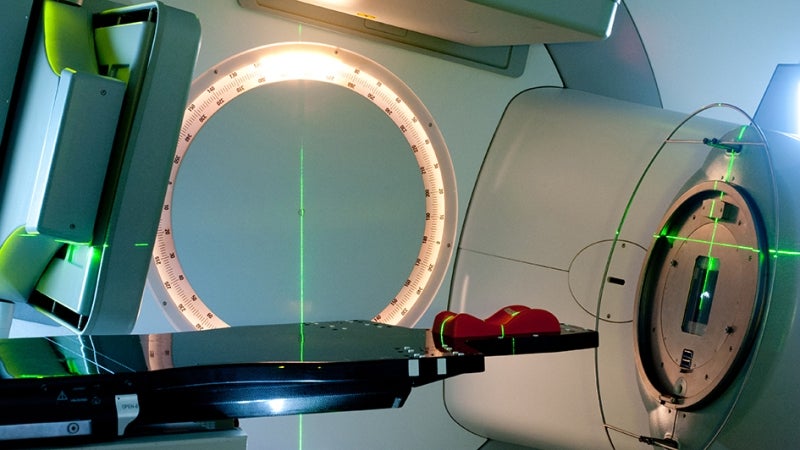
A report published by The Institute of Cancer Research (ICR) has revealed that bladder cancer extended to the lymph nodes of the pelvis can be treated through targeted forms of radiotherapy.
Scientists at ICR London carried out a phase II clinical trial evaluating the use of radiotherapy in patients with bladder cancer, which had extended to the pelvic lymph nodes.
Go deeper with GlobalData


Discover B2B Marketing That Performs
Combine business intelligence and editorial excellence to reach engaged professionals across 36 leading media platforms.
The study was conducted in collaboration with researchers and clinicians at The Royal Marsden NHS Foundation Trust.
The research evaluated the use of a type of radiotherapy known as intensity-modulated radiotherapy (IMRT) to cure bladder cancer, also in pelvic lymph nodes, taking note of any harmful effects resulting from the therapy.
IMRT is an advanced mode of high-precision radiotherapy. A radiation beam fits firmly around the tumour while the machine moves around the patient’s body.
ICR urological cancer professor Robert Huddart, who led the study, said: “We hypothesised that using IMRT would give the best chance of maximising the dose of radiation which is delivered to the tumours, while minimising the dose of radiation delivered to healthy cells, reducing the risk of toxic side effects in patients.”
During the trial, some patients had already received neoadjuvant chemotherapy to reduce the tumour before starting radiotherapy treatment.
It allowed researchers to evaluate whether chemotherapy single-handedly or together with radiotherapy offered the best chances for patients.
Results showed that between 70.3% and 82.4% of patients suffered adverse side effects, including increased urinary frequency and diarrhoea.
However, after one year of treatment, side effects reduced significantly.
Furthermore, research showed that only 5% of the patients were suffering from side effects at the more severe end of the scale, Grades 3 and 4.
The study showed that the five-year overall survival rate was 34%, in comparison to the survival rate of node-positive bladder cancer patients who received chemotherapy and surgery alone.


