
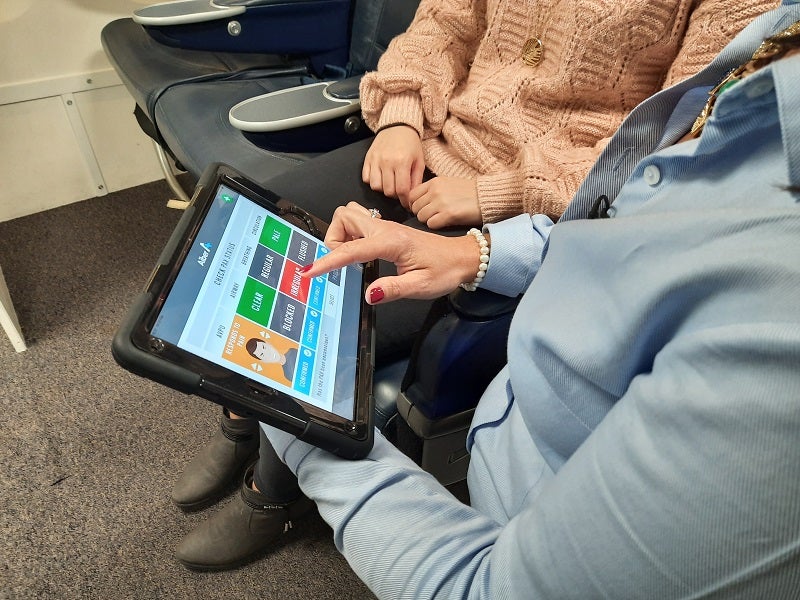
Aberdeen University spinout MIME Technologies has unveiled a smart device called Aiber, which could completely alter how medical emergencies are managed on flights.
The tablet device is capable of streaming passenger data to the ground, allowing for real-time digital communication between cabin crew, the passenger and clinical support.
Go deeper with GlobalData


Discover B2B Marketing That Performs
Combine business intelligence and editorial excellence to reach engaged professionals across 36 leading media platforms.
Aiber is designed for both commercial and business jets and is applicable to a wide range of events, from burns and allergic reactions to heart attacks. It can integrate wireless, clinical-grade heart sensing equipment into its interface, which is specifically designed to be used by non-medical professionals like cabin crew.
Using artificial intelligence (AI), Aiber automatically transmits and stores essential information during in-flight medical events, which may otherwise be missed or only recorded after the fact.
MIME Technologies co-founder and CEO Anne Roberts said: “For the first time, clinicians on the ground will be able to follow, in real-time, the deterioration or improvement of a passenger in the air using wireless technology and the tech provides a seamless handover to emergency services meeting the aircraft. We believe the technology will help avoid unnecessary diversions but, more significantly, it will help save lives by providing ‘eyes in the sky’ on flights globally.”
In-flight medical events are increasing as the population ages and more people fly with long-term health conditions. In a single year, flight diversions for medical reasons can impact 60 flights for just one major airline, costing between £38,500 and £464,000 per diverted flight, the company said.
While some airlines can call clinical ‘on the ground’ support, this can require the cabin crew to leave the patient’s side to use the on-board phone or existing headphone technology, which is prone to significant noise interference.
City of Glasgow College head of travel and tourism Alan Cowan-Moore said: “During my time as cabin crew, I helped resuscitate a passenger who suffered a cardiac arrest. I was anxious about the care I was providing, wondering if my efforts were effective. Fortunately, I had the help of an off-duty doctor, but many don’t.
“Aiber offers a technological solution to support cabin crew in such situations. The potential to reduce the need for diversions, through effective identification of medical conditions, is of enormous benefit for both customers and airlines.”


