
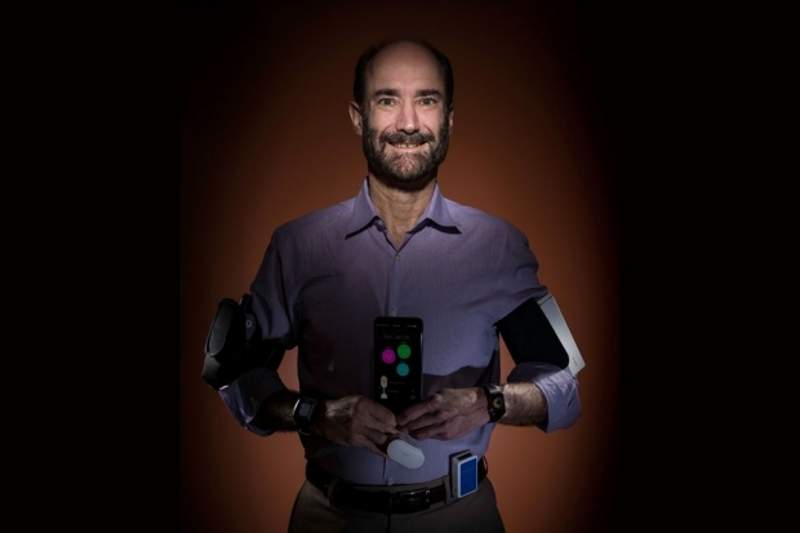

New research by Stanford University School of Medicine has indicated that fitness monitors and other wearable biosensors can predict an individual's potential to fall ill.
Findings of the ongoing study stated that wearable sensors monitoring heart rate, activity, skin temperature and other variables can identify onset of ailments such as infection, inflammation and insulin resistance inside the person’s body.
Go deeper with GlobalData


Discover B2B Marketing That Performs
Combine business intelligence and editorial excellence to reach engaged professionals across 36 leading media platforms.
The study is focused on precision health and is intended to anticipate and prevent disease by allowing time for precise diagnosis and subsequent treatment.
During the study, volunteers wore between one and seven commercially available activity monitors and other monitors which produced more than 250,000 measurements in a single day.
The research team analysed almost two billion measurements derived from 60 people along with continuous data from each participant’s wearable biosensor devices and periodic data from laboratory tests of their blood chemistry, gene expression and other measures.
The collected data provided information on the individual’s weight, heart rate, oxygen content in blood, and skin temperature. It also gathered data on activities such as sleep, steps, walking, biking and running, calories expended; acceleration; and exposure to gamma rays and X-rays.
Scripps Research Institute genomics professor Eric Topol said: “I was very impressed with all the data that was collected.
“There is a lot here, a lot of sensors and a lot of different data on each person.”
The study indicated that, given a baseline range of values for each person, it is possible to monitor deviations from normal and associate those deviations with environmental conditions, illness or other factors that affect health.
It expected that algorithms designed to identify patterns of change can pave the way for better clinical diagnostics and research.
Image: Geneticist Michael Snyder wore seven biosensors during the study. Photo: courtesy of Steve Fisch.


