
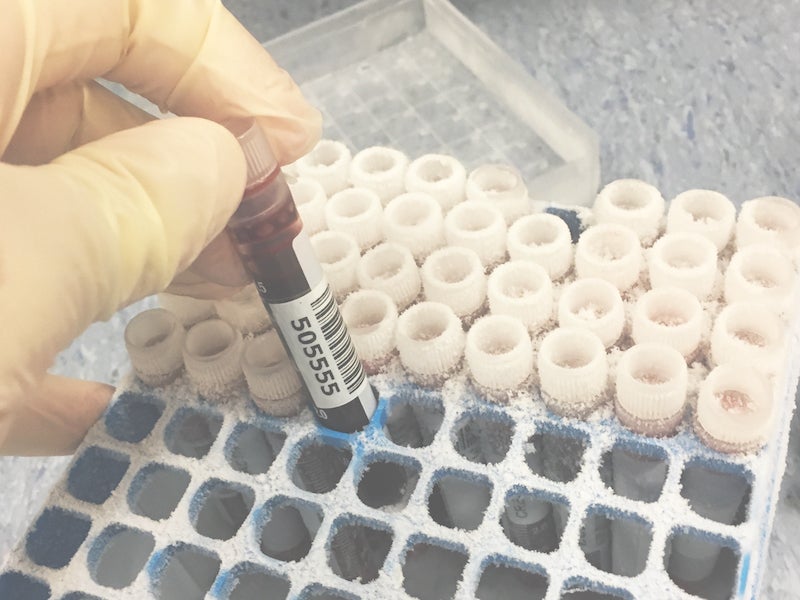
Scientists at the UK Dementia Research Institute’s (DRI) Research and Technology Centre based at Imperial College London have developed a blood test that could detect brain damage in individuals who have sustained traumatic brain injury (TBI).
The team conducted a multicentre study that enrolled more than 200 patients who had experienced moderate to severe TBI from eight key trauma centres in Europe.
Go deeper with GlobalData


Discover B2B Marketing That Performs
Combine business intelligence and editorial excellence to reach engaged professionals across 36 leading media platforms.
The aim of the study was to detect a blood biomarker that could precisely indicate axonal damage in the brain after TBI.
Assessing the protein biomarker in the blood will offer an easier, precise way to predict clinical outcomes and could aid in detecting people at increased risk of developing dementia, UK DRI noted.
To detect an appropriate protein marker, the team leveraged a technology called single-molecule array (SiMoA) that can measure sub-femtomolar (10-16) levels of chemicals in the blood.
The researchers found that determining blood levels of neurofilament light offered a precise lasting prognosis for the patient.
To establish the blood test findings, advanced types of brain imaging were used.
Blood levels of neurofilament light were shown to be closely linked to measures from an advanced type of imaging called diffusion MRI, which also offers measures associated with axon damage.
On comparing the blood test data to brain imaging that assesses shrinkage or atrophy of the brain, the team found that blood levels of neurofilament light tracked extremely well to brain atrophy.
Furthermore, the test helped in predicting further nerve cell degeneration up to a year after the injury.
UK DRI Care Research and Technology Centre director Professor David Sharp said: “Outcomes after TBI are very difficult to predict. This is a major challenge for doctors trying to care for patients recovering from head injuries of all severities.
“Our work shows that measuring neurofilament light soon after head injury helps predict who will develop long-term problems.
“We are applying this in various contexts, including for the investigation of sporting TBI, and will be investigating whether this blood test can be used to predict those at high risk of developing dementia.”
Fluid samples obtained by the scientists from around the damaged neuronal axons showed that the protein in the blood originated at the source of the damage.


