

Boston Scientific is taking clear steps to advance its European, Middle East and Africa (EMEA) region market position in the urology space.
The company drew significant attention at the J.P. Morgan Healthcare conference in January 2026 for its acquisition of urinary incontinence specialist Valencia Technologies. However, the medtech giant’s previous move in this area was the $3.3bn acquisition of Axonics in October 2024, which availed Boston of sacral neuromodulation (SNM) products for bladder dysfunction treatment.

Discover B2B Marketing That Performs
Combine business intelligence and editorial excellence to reach engaged professionals across 36 leading media platforms.
Boston is bulking up its urology portfolio to serve as broad a patient population as possible in the bladder dysfunction and faecal incontinence segments. Valencia’s eCoin is an implantable tibial nerve stimulation (ITNS) system for urge urinary incontinence (UUI) treatment, while Axonics SNM product offerings are indicated for overactive bladder (OAB) and faecal incontinence (FI), while its Bulkamid Urethral Bulking System is indicated for stress urinary incontinence (SUI) treatment in women.
In Boston’s most recent financial report, its urology segment achieved revenue of $682m, reflecting a Q3 2025 uplift of over 28% versus the same period in 2024.
Axonics’ SNM treatments deliver mild electrical pulses to the sacral nerves to help restore normal communication between the brain and the bladder and bowel. SNM therapies are positioned as a means to correct improper nerve signals that cause bladder or bowel dysfunctions.
According to a report by GlobalData, the global neurological devices market will reach a valuation of $20.9bn by 2033, up from $12.5bn in 2023.
Miguel Aragón, vice president of urology for Boston Scientific in the EMEA region, states that with its existing products in urology, Boston has so far been able to treat over one million patients annually; but with Axonics under its ownership, this number swells to more than three million.
With the impending launch of Axonics F15 SNM system in Europe, Medical Device Network spoke with Aragón to learn more about the growth in Boston’s EMEA region urology portfolio and the role SNM has to play now and in the future.
This interview has been edited for length and clarity.
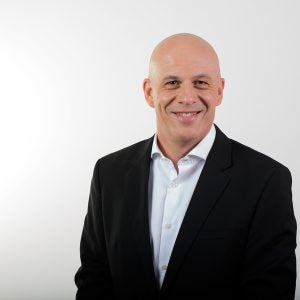
Ross Law (RL): What does Boston’s acquisition of Axonics represent for SNM innovation?
Miguel Aragón (MA): At Boston Scientific, we have a wide urology portfolio covering a range of different segments, with incontinence being one of those. One of the patient needs in this segment is for overactive bladder treatment.
SNM represents a complementary value proposition for providing minimally invasive therapies to patients with bladder-bowel dysfunctions such as SUI, which is also covered by other products we inherited from Axonics, including Bulkamid, a hydrogel-based urethral bulking agent for SUI treatment.
RL: Please outline the benefits of integrating Axonics’ provisions into Boston’s urology business.
MA: We have undertaken a good number of integrations of companies we acquired over the past decade, each of which tends to broaden our capacity for the patient population volumes we can treat.
Our urology portfolio has different segments, each of which we are aiming to be the market leader within. These areas include stone management, benign prostatic hyperplasia (BPH) management, urology-oncology, and addressing incontinence and erectile dysfunction in the men’s health space. And by adding Axonics products, we’re unlocking treatment modalities for overactive bladder and SUI in women’s health.
RL: As SNM goes, what key differentiators does Axonics bring to Boston’s overall urology portfolio?
MA: Axonics was a company that was developing the technology with the patient experience at the centre of everything. Longevity has been a key differentiator for Axonics, with a rechargeable system that has a minimum implant life of 20 years and now a recharge-free device with a 17-year implant life at nominal settings. In addition, Axonics’ universal lead is compatible with both the rechargeable and the recharge-free versions of its device, allowing patients and physicians the choice to switch their device type later in life. Axonics also has a Smart Programming algorithm that personalises a patient’s programming based on intraoperative responses and lead placement and is designed to minimise the need for patients to adjust their programme. All such elements together have served to improve the patient experience with SNM.
RL: Tell me about the latest addition to the SNM portfolio in Europe.
MA: Axonics started in the SNM market with a rechargeable device with an implant life of more than 20 years, with recharging required only once every six to 10 months. We are now launching a recharge-free device in the European market called Axonics F15 with a battery life of 17 years at nominal settings, and over 20 years at lower settings. Patients will not have to recharge any components of the Axonics F15 system. We will be officially launching this device during the EAU26 conference this weekend.
RL: What opportunities do innovations like F15 represent for driving patient access to SNM in EMEA?
MA: I think they represent a combination of educating more patients and doctors about SNM, since they are not all aware of the benefits of these therapies.
Plus, we need to activate more patients in the sense that they can appreciate SNM technology’s benefits when it is fully integrated. For instance, with a rechargeable device, every time the patient recharges it, they become aware of the disease they have.
But R20’s rechargeable system only needs to be recharged every six to 10 months, thereby widening the intervals at which patients even need to ruminate on the symptoms they have.
RL: What is next for SNM?
MA: There remain many unmet needs. Currently, we have an indication for faecal incontinence with our rechargeable Axonics R20 device. We don’t yet have this indication for Axonics F15, but we are now working on that.
In the coming few months, we will have the full portfolio, rechargeable and non-rechargeable, ready to support patients with OAB and faecal incontinence. I would say this is a remarkable step, because in the same way that we have 49 million patients in Europe suffering from OAB, we also have a big part of the faecal incontinence market in EMEA that could benefit from this technology.


