
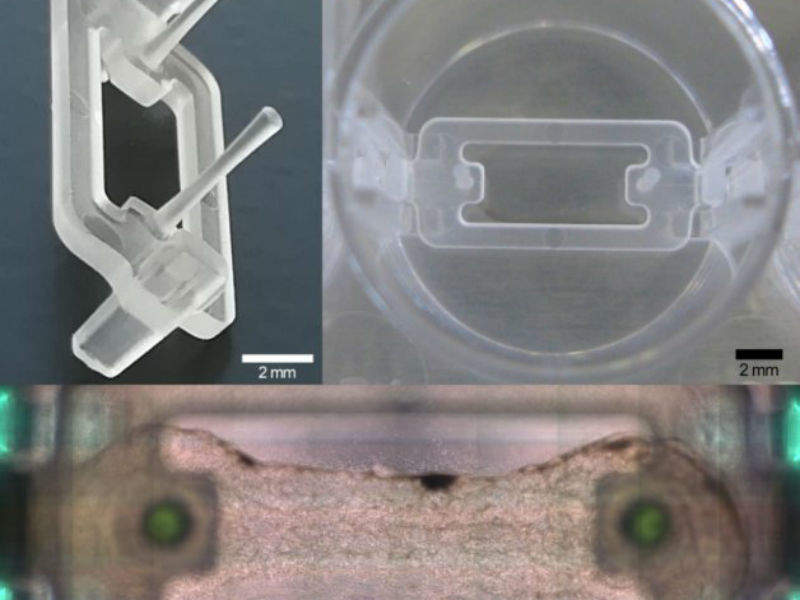
Researchers from Zurich University of Applied Sciences in Switzerland have developed a screening platform that uses 3D bioprinting for the automated production of 3D muscle and tendon-like tissues.
The development of the device has been described by the researchers in an article in the SLAS Technology journal.
Go deeper with GlobalData


Discover B2B Marketing That Performs
Combine business intelligence and editorial excellence to reach engaged professionals across 36 leading media platforms.
The device works by printing muscle and tendon tissue models in alternating layers of photo-polymerised gelatin-methacryloyl-based bioink and cell suspensions in a dumbbell shape on to a newly designed cell culture insert in 24-well plates containing two vertical posts. The cells showed high viability after they had been printed in the culture and good tissue differentiation based on marker gene and protein expressions.
Functionality of the muscle tissue models was also demonstrated by the calcium signalling of Fluo4-loaded cells and myofibre contractility induced by electrical pulse stimulation. The research team successfully fabricated tendon-muscle-tendon co-cultures by printing tenocytes around the posts of the cell culture inserts and the myoblasts between the posts.
The new approach has been described as particularly important by the researchers because of the combination of the automated musculoskeletal tissue production using 3D bioprinting with a new microwell plate to address specific tissue attachment requirements. They claim that this screening platform could be a promising tool for musculoskeletal drug discovery and development.
The scientists believe the device could fill a gap in the market for medication that treats age-related degenerative muscle and tendon diseases. The current lack of efficient and robust functional assays for compound screening has been labelled as one of the reasons for a bottleneck in the discovery and development of drugs for musculoskeletal issues.
US Tariffs are shifting - will you react or anticipate?
Don’t let policy changes catch you off guard. Stay proactive with real-time data and expert analysis.
By GlobalDataThe researchers said: “In the future, the specialised 24-well plate will be equipped with electrodes for electrical stimulation to monitor differences in muscle contraction after drug exposure.
“The development of platforms to produce, maintain/grow, and analyse in vitro 3D tissue models is a first step toward implementation in the pharma industry for drug development applications to increase the throughput and reliability.”



