
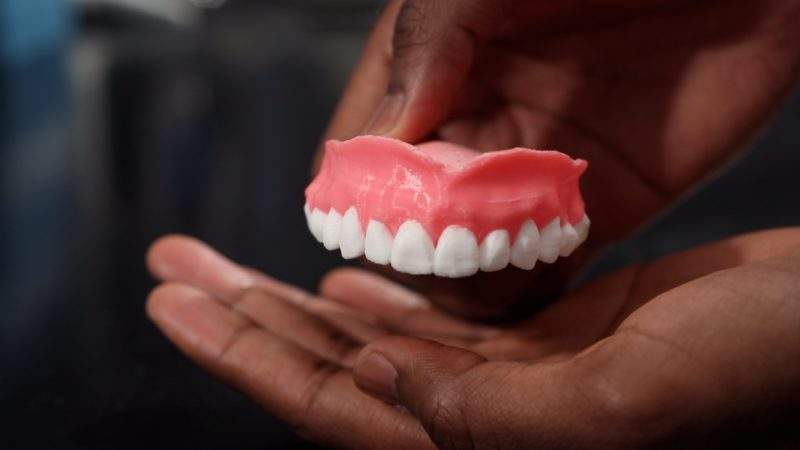
Researchers from the University of Buffalo have used 3D printing to construct dentures that are filled with microscopic capsules that release antifungal medication Amphotericin B.
In the study ‘Functionalised prosthetic interfaces using 3D printing: Generating infection-neutralising prosthesis in dentistry’, published in the journal Materials Today Communications, the scientists describe how they repurposed poly(methyl methacrylate), a commonly-used dental polymer, for 3D printing. The polymer contains polycaprolactone microspheres that release Amphotericin B.
Go deeper with GlobalData


Discover B2B Marketing That Performs
Combine business intelligence and editorial excellence to reach engaged professionals across 36 leading media platforms.
“The major impact of this innovative 3D printing system is its potential impact on saving cost and time,” said assistant professor in the university’s department of oral biology and senior author of the study Praveen Arany.
“The antifungal application could prove invaluable among those highly susceptible to infection, such as the elderly, hospitalised or disabled patients.”
The team printed the dentures with acrylamide, a chemical compound that resembles a white crystalline solid and decomposes in the presence of acids. The dentures were then bent over a flexural strength testing machine to measure their breaking point; while the 3D printed dentures were recorded as having a flexural strength 35% lower than that of conventional dentures, they did not break.
The scientists then tested the ability of the dentures to release Amphotericin B. The teeth were tested with one, five and ten layers of the medication, to see if more could be held within the teeth without impeding its ability to be released. The researchers found that sets of teeth with five and ten layers were impermeable, preventing the medicine from being released, but that Amphotericin B was easily released by dentures with a single porous layer.
The technique could enable dentists to produce dentures faster than using conventional manufacturing, and the team intends to further refine the technology by strengthening the dentures with glass fibres and carbon nanotubes.
The technology could also potentially be used for other clinical therapies, such as splints and casts.



