
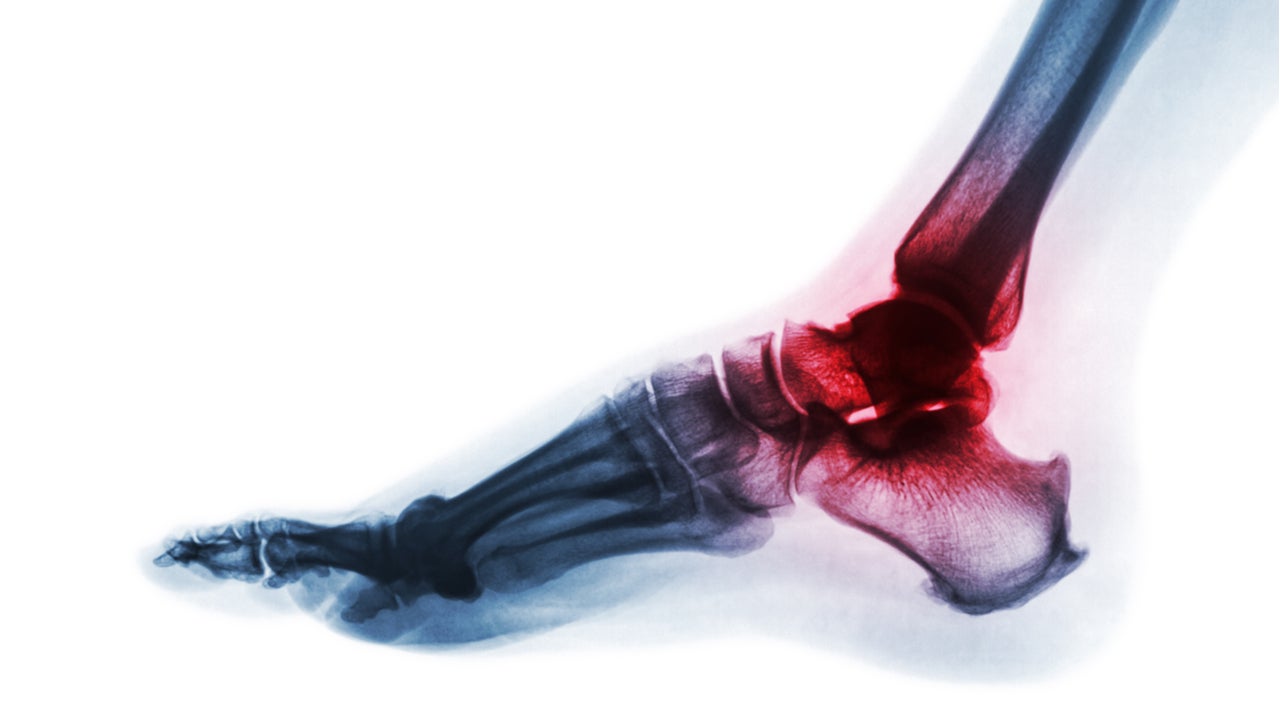
The US Food and Drug Administration (FDA) has approved Additive Orthopaedics’ 3D-printed Patient Specific Talus Spacer, a first-of-its-kind implant for the treatment of avascular necrosis (AVN) of the ankle joint, as a humanitarian use device.
AVN is a rare but serious progressive condition that causes the death of bone tissue. It typically occurs after a sudden injury or sustained long-term tissue damage that limits blood supply to the area and causes tissue to become necrotic.
Go deeper with GlobalData


Discover B2B Marketing That Performs
Combine business intelligence and editorial excellence to reach engaged professionals across 36 leading media platforms.
The implant is designed to replace the talus, the bone in the ankle that connects the leg and foot.
The approval order makes Additive Orthopaedics’ Patient Specific Talus Spacer the first and only patient-specific total talus replacement implant approved by the FDA for use in the United States.
Late-stage AVN of the ankle may result in the talus bone partially or fully collapsing.
Current available treatments include fusing the joints in the foot and ankle, which can help to alleviate pain but eliminates motion of the joint, or below-the-knee amputation.
Additive’s spacer provides a joint-sparing alternative to these interventions.
The spacer has been made available under FDA’s humanitarian device exemption (HDE). Devices approved under the HDE are intended to benefit patients by treating or diagnosing a condition that affects fewer than 8,000 individuals a year.
Each application of the Patient Specific Talus Spacer is tailored to the anatomy of the individual patient, modelled from computed tomography (CT) scans of the ankle joint and then 3D-printed from cobalt chromium alloy.
A surgical procedure is then performed to replace the patient’s talus bone with the implant.
Additive orthopaedics president Greg Kowalczyk said: “Avascular necrosis of the talus is extremely painful and debilitating for these patients. Surgical treatment options are below-the-knee amputation or joint fusion, which results in loss of motion of the ankle and can have poor outcomes. The Patient Specific Talus Spacer is another example of how 3D-printed devices can improve the standard of care.
“This is a tremendous regulatory win which took significant effort from our team and I want to thank everyone, including the US Food and Drug Administration, who assisted in making this technology commercially available in the domestic market for patients suffering from AVN.”
3D-printed implants and biocompatible scaffolds have emerged in recent years as a promising method of promoting bone or tissue regeneration after serious injuries, particularly during humanitarian crises where access to advanced surgical interventions may be limited or non-existent.



