
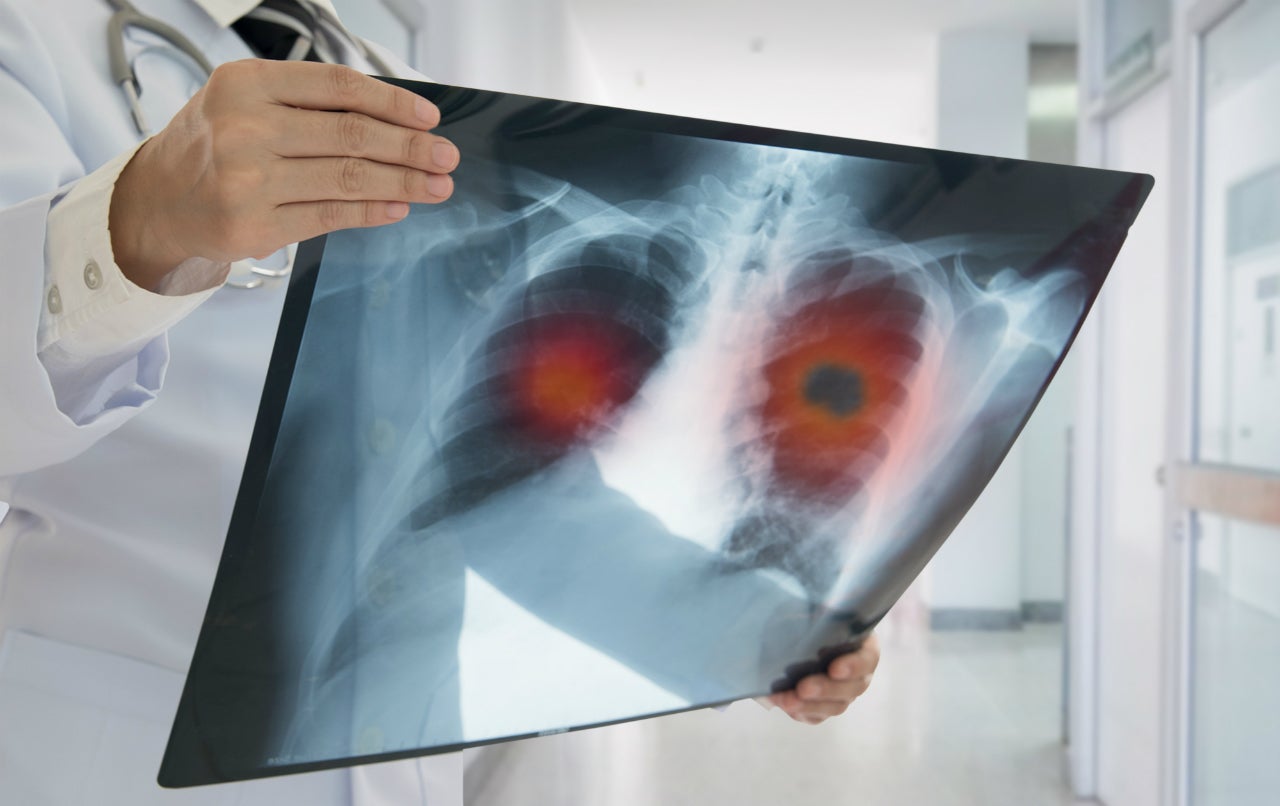
A new study has found that an artificial intelligence (AI) algorithm trained to detect pulmonary nodules can improve lung cancer detection on chest radiographs.
Conducted by MGH and a South Korean medical AI company Lunit, the study evaluated 5,485 chest radiographs collected from participants in the National Lung Screening Trial (NLST) with an AI software called Lunit INSIGHT CXR that diagnoses chest X-rays.
Go deeper with GlobalData


Discover B2B Marketing That Performs
Combine business intelligence and editorial excellence to reach engaged professionals across 36 leading media platforms.
The AI solution is designed to deliver location information of detected lesions in the form of heatmaps and abnormality scores, indicating the probability that the detected lesion is abnormal.
It also generates an AI ‘case report’, summarising the analysis result by each finding.
The study reported 94% sensitivity and 83% specificity for the AI algorithm in detecting malignant pulmonary nodules.
Furthermore, the study noted that sensitivity exhibited by the software is higher compared to NLST radiologists and its possibility can help detect lung cancer when used as a second reader.
US Tariffs are shifting - will you react or anticipate?
Don’t let policy changes catch you off guard. Stay proactive with real-time data and expert analysis.
By GlobalDataMGH attending thoracic radiologist and the senior author of the study Subba Digumarthy said: “Low-dose CT is recommended for lung cancer screening because the detection of chest radiographs is challenging for radiologists due to its projectional nature of radiography.
“However, compared with chest radiography, CT is less accessible and more expensive, exposing patients to a higher dose of radiation. This study shows that AI can provide diagnostic value to more patients by supplementing the shortcomings and maintaining the advantages of X-ray diagnosis.”
Lunit CEO Brandon Suh added: “Through this first collaboration with the MGH research team, we are happy to validate the generalisability and accuracy of our AI approach based on NLST data.
“It is a meaningful study to show Lunit INSIGHT CXR can be utilised to diagnose cancer-related nodules and detect lung cancer in earlier stages.”
Lunit Insight CXR can analyse over three million images in approximately 80 countries. It has 97% to 99% accuracy in detecting ten major chest diseases, including lung nodules and pneumothorax. The software is CE marked and clinically available in Europe.



