
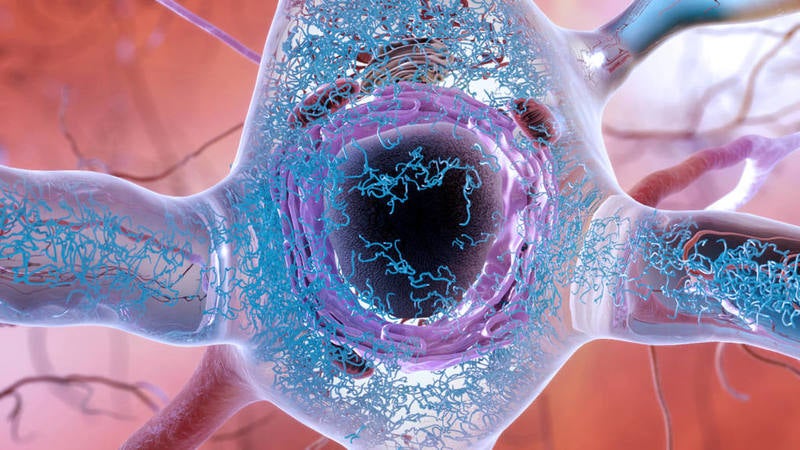
Researchers at Brigham and Women’s Hospital in the US are working on the development of a blood test to accurately diagnose and potentially predict Alzheimer’s disease before the appearance of symptoms.
The new test, which is based on the detection of tau proteins, is expected to replace existing costly brain scans and cerebrospinal fluid tests.
Go deeper with GlobalData


Discover B2B Marketing That Performs
Combine business intelligence and editorial excellence to reach engaged professionals across 36 leading media platforms.
To develop the test, the team developed assays to measure different forms of tau in blood and cerebrospinal fluid.
The assay tests were applied to the Harvard Aging Brain Study and Institute of Neurology, London participants. The researchers discovered a subset of tau proteins, which are found to be elevated in Alzheimer’s.
Brigham and Women’s Hospital Ann Romney Center for Neurologic Diseases researcher Dominic Walsh said: “A blood test for Alzheimer’s disease could be administered easily and repeatedly, with patients going to their primary care office rather than having to go into a hospital.
“Ultimately, a blood-based test could replace cerebrospinal fluid testing and/or brain imaging. Our new test has the potential to do just that. Our test will need further validation in many more people, but if it performs as in the initial two cohorts, it would be a transformative breakthrough.”
US Tariffs are shifting - will you react or anticipate?
Don’t let policy changes catch you off guard. Stay proactive with real-time data and expert analysis.
By GlobalDataThe research team assessed five different tests for tau fragments. They observed that a test called the NT1 assay demonstrated sufficient diagnostic sensitivity and specificity as a potential diagnostic tool for Alzheimer’s.
Results were validated in a second group of patients recruited by the Shiley-Marcos Alzheimer’s Disease Research Center at the University of California. However, larger studies are needed to confirm the results.
The researchers published their findings in the Alzheimer’s & Dementia journal.
Currently, the team is planning to study patients over time to gain insights on the change of blood tau levels on disease progression and their volume before the onset of symptoms.



