
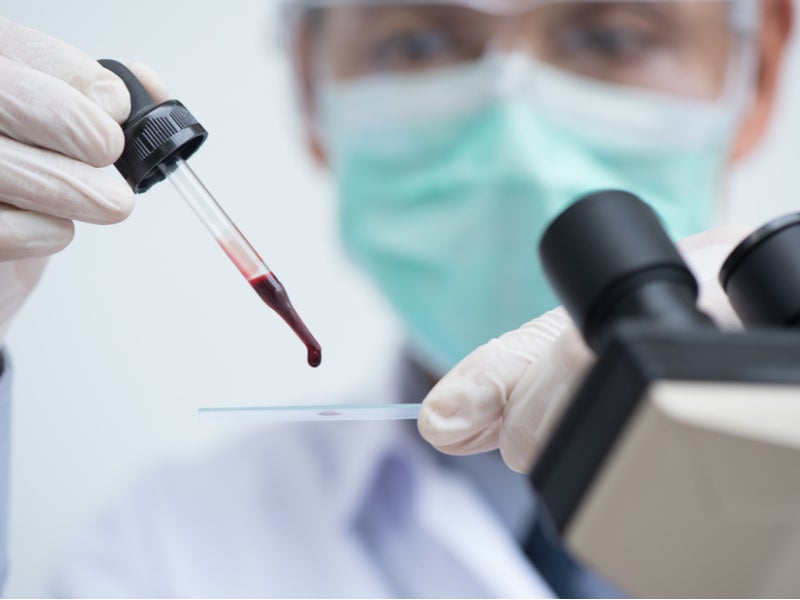
A new whole blood assay could help physicians rapidly diagnose antimalarial drug resistance in primary care.
The assay eliminates the processing steps around antimalarial resistance testing, avoiding the logistical complexities associated with sending a sample to a laboratory and allowing clinicians to re-evaluate treatment options on-site.
Go deeper with GlobalData


Discover B2B Marketing That Performs
Combine business intelligence and editorial excellence to reach engaged professionals across 36 leading media platforms.
The research was completed by a clinical team at Vanderbilt University, Tennessee, the results of which have been published in The Journal of Molecular Diagnostics.
Molecular detection is currently the most efficient method for drug resistance testing in malaria patients, but it requires a process of DNA extraction and PCR instrumentation from whole blood, which is a time-consuming and cost-intensive process.
The new assay uses reporter dyes to pinpoint DNA mutations associated with antimalarial resistance. A blood sample is taken from a patient who appears to be exhibiting signs of drug resistance and added to a reaction tube, bypassing the need for laboratory testing.
Vanderbilt University professor of biomedical engineering Mindy Leelawong said: “Monitoring of antimalarial resistance is important to prevent its further spread, but the available options for assessing resistance are less than ideal for field settings.
“By creating a procedure that overcomes the obstacles presented by blood, we have developed a simple method to quickly identify mutations associated with drug resistance. As a consequence, higher throughput testing and more rapid sample-to-result turnaround will be possible.”
The research team anticipates that this technique can be used to test a patient’s resistance to artemisinin, the current first-line therapy for malarial infection, and future drugs as they become available. They also hope to see the technique become a platform for evaluating other molecular targets found in the blood.
People who contract malaria typically become very sick with high fevers, shaking chills and flu-like illness. There were 219 million cases of malaria globally in 2017, resulting in 435,000 deaths.



