
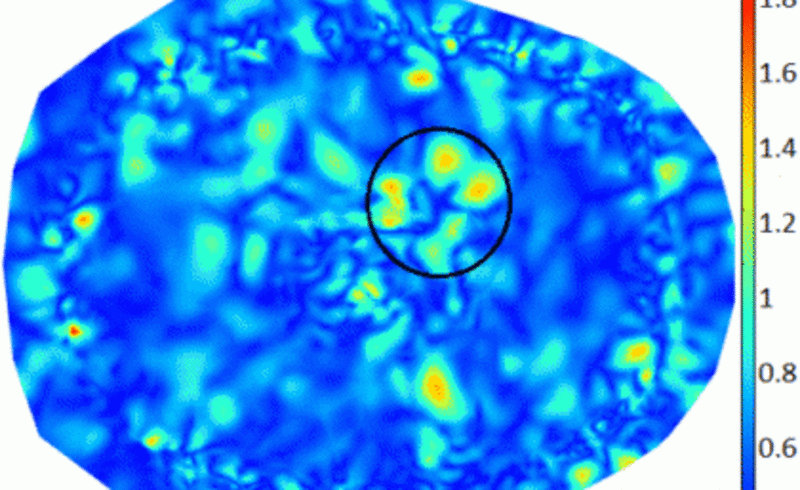
Researchers at the University of Queensland (UQ) and EMvision Medical Devices in Australia have developed a portable, non-invasive brain scanner to obtain three-dimensional (3D) images of the brain.
Designed using technology licensed to EMvision by the university’s UniQuest firm, the new device uses an algorithm to map the brain tissue with safe, low-power microwaves for delivering 3D images.
Go deeper with GlobalData


Discover B2B Marketing That Performs
Combine business intelligence and editorial excellence to reach engaged professionals across 36 leading media platforms.
The scanner is anticipated to accelerate diagnosis of brain injuries and stroke, as well as reduce brain damage and related rehabilitation costs.
EMvision Medical Devices CEO John Keep said: “In the case of stroke, the 3D image would enable medical professionals to quickly identify if damage is a haemorrhage or clot and to treat the patient accordingly, saving precious time.
“The difference between permanent disability or death and a positive recovery is timely diagnosis and treatment. Every hour appropriate treatment is delayed, the brain ages by about 3.6 years.”
EMvision is currently refining the prototype of the device to meet safety and efficacy requirements, as well as allow easy integration into clinical pathways.
US Tariffs are shifting - will you react or anticipate?
Don’t let policy changes catch you off guard. Stay proactive with real-time data and expert analysis.
By GlobalDataThe firm intends to carry out a pilot clinical trial at the Princess Alexandra Hospital in the coming months.
Researchers expect that the device with life-saving potential will be useful in emergency departments, ambulances and remote locations.
UniQuest CEO Dr Dean Moss said: “The portability, cost-effectiveness and safety of this device is a very attractive proposition for the healthcare industry, with potential for use in both hospitals and ambulances throughout the world.
“It is also ideal for use in rural and remote areas. In Australia, rural and remote stroke patients are 20% more likely to die than their metropolitan counterparts due to delayed diagnosis.”



