
Scientists at Chan Zuckerberg (CZ) Biohub, Mayo Clinic and UC San Francisco have discovered an autoimmune disease that reportedly affects men with testicular cancer.
The ‘testicular cancer-associated paraneoplastic encephalitis’ disease is said to cause severe neurological symptoms in men.
Go deeper with GlobalData


Discover B2B Marketing That Performs
Combine business intelligence and editorial excellence to reach engaged professionals across 36 leading media platforms.
Patients progressively lose control of their limbs, eye movements, and speech, in some cases.
The disease begins with a testicular tumour, which reportedly causes the immune system to attack the brain.
Patients are often misdiagnosed or undiagnosed, which means that the appropriate treatment is delayed.
Using a variation of programmable phage display technology, scientists have identified a highly specific and unique biomarker for the disease.
Over 700,000 autoantibody targets across all human proteins are screened simultaneously under the refined version of this technology.
UCSF researchers used the tool to evaluate cerebrospinal fluid from a 37-year-old man who had a history of testicular cancer and debilitating neurological symptoms, such as vertigo, imbalance and slurred speech.
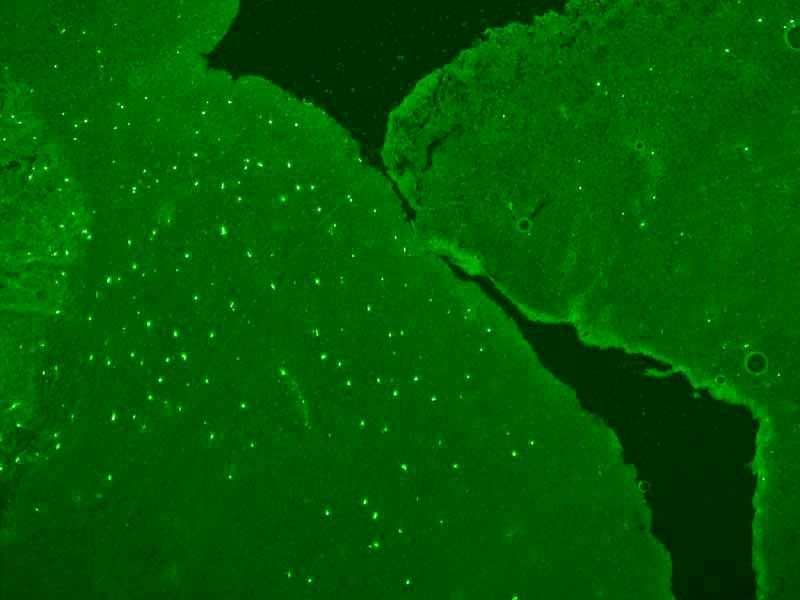
The advanced technology identified autoantibodies targeting Kelch-like protein 11 (KLHL11), found in the testes and parts of the brain.
The scientists then correlated and validated the results with additional patient samples from the Mayo Clinic.
A UCSF team led by Chan Zuckerberg Biohub co-president and biochemist Joe DeRisi and UCSF Weill Institute for Neurosciences member and neurologist Michael Wilson developed a customised version of phage technology that identified KLHL11 as the target for testicular cancer-associated paraneoplastic encephalitis based on a patient’s sample.
The collaborative effort was spearheaded by co-first authors UCSF postdoctoral researcher Caleigh Mandel-Brehm and Mayo Clinic neurologist and lab medicine physician Divyanshu Dubey.
Using the biomarker signature, 37 patients have been diagnosed with this paraneoplastic disease.
The study has been published in The New England Journal of Medicine.
Other co-authors from Mayo Clinic are Thomas Kryzer, Vanda Lennon and Andrew McKeon. Co-authors from UCSF are Brian O’Donovan, Baouyen Tran, Sara Vazquez, Hannah Sample, Kelsey Zorn, Lillian Khan, Ian Bledsoe and Samuel Pleasure.
Mayo Clinic neurologist and corresponding author of the study Sean Pittock said: “Mayo Clinic’s neuroimmunology laboratory has a long history of biomarker discovery, and this continues that tradition, bringing together Mayo Clinic’s biobank, the largest repository of biospecimens in the world, with advanced technologies being devised and implemented at UCSF and CZ Biohub.
“By working together, our organisations have the potential to make biomarker discoveries much more rapidly.”



