
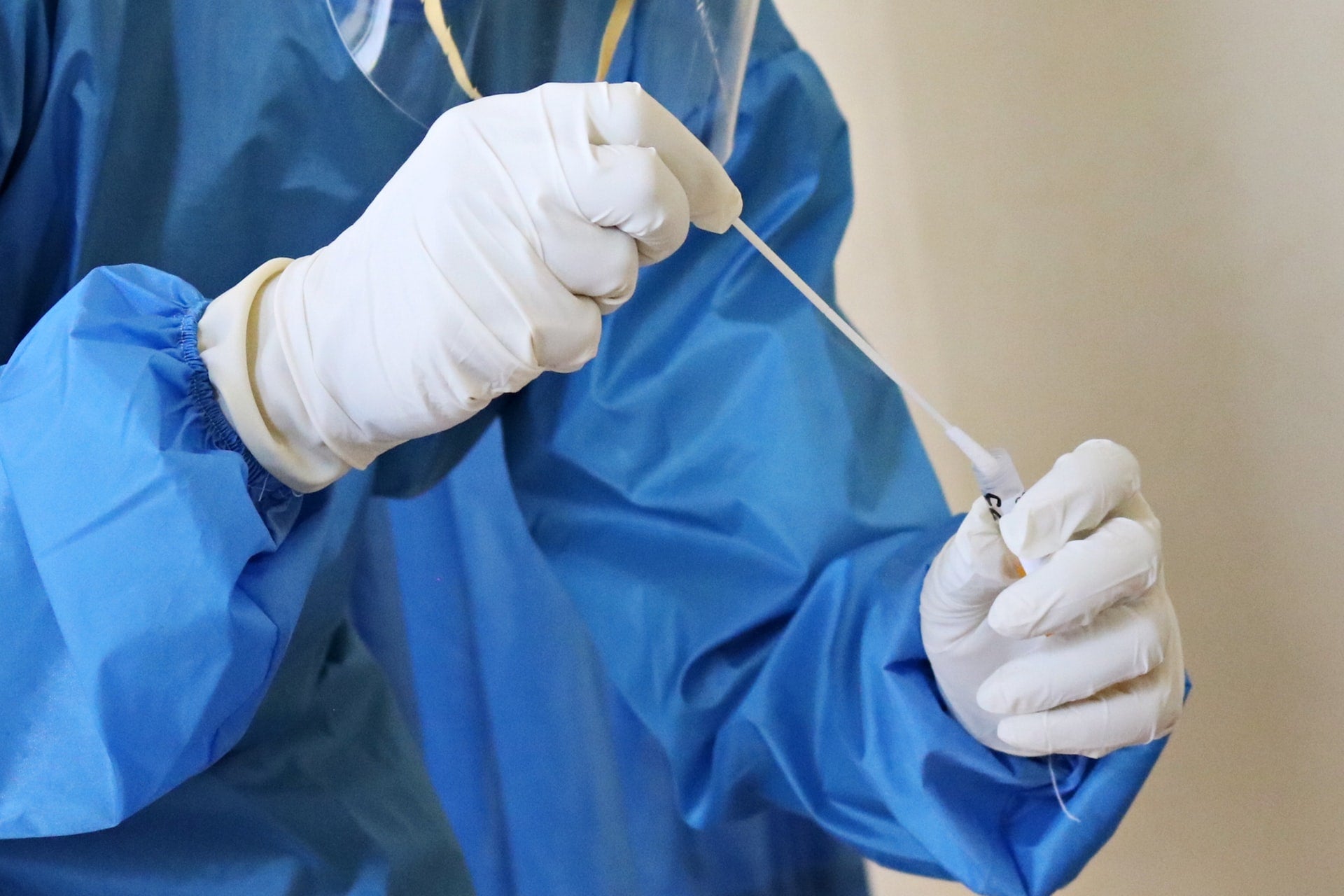
Scientists from the University of Birmingham, UK, have confirmed the accuracy of a new sensitive Covid-19 testing method.
The speed, preciseness and sensitivity of the exponential amplification reaction (EXPAR) test were confirmed by the researchers in a three-way comparison study.
Go deeper with GlobalData


Discover B2B Marketing That Performs
Combine business intelligence and editorial excellence to reach engaged professionals across 36 leading media platforms.
Named RTF-EXPAR, the test offers a sample-to-signal time of fewer than ten minutes, even for reduced viral levels, which is when existing lateral flow tests are less effective.
The study analysed whether the EXPAR method was as sensitive but quicker than both polymerase chain reaction (PCR) and loop-mediated amplification (LAMP) tests, which are currently used in hospital settings.
Both PCR and LAMP tests can identify viral ribonucleic acid (RNA) present in reduced levels in mouth and nose swab samples utilising a two-step process.
These tests initially convert RNA to deoxyribonucleic acid (DNA) in a process called reverse transcription and subsequently amplify the material several times to make it detectable in the sample.
US Tariffs are shifting - will you react or anticipate?
Don’t let policy changes catch you off guard. Stay proactive with real-time data and expert analysis.
By GlobalDataRTF-EXPAR performs the RNA to DNA conversion step without reverse transcription and uses EXPAR, an alternative DNA amplification process, to produce the read-out signal.
Professor Tim Dafforn said: “EXPAR amplifies DNA at a single temperature, thus avoiding lengthy heating and cooling steps found in PCR.
“However, while LAMP also uses a single temperature for amplification, EXPAR is a simpler and a more direct process, in which much smaller strands are amplified.
“This makes EXPAR an even faster DNA amplification technique than not only PCR but also LAMP.”
According to the study, the RTF-EXPAR method converts under ten strands of RNA into billions of DNA copies in less than ten minutes, leveraging a one-pot assay. This assay is compatible with basic, benchtop devices that are more accessible than those used with existing testing methods.
Furthermore, the test could offer improved time to signal detection as compared to PCR and LAMP-based assays.
At low concentrations of RNA of 7.25 copies/µL, the time to signal detection was 42.67 minutes for PCR, 11.25 minutes for LAMP and 8.75 minutes for EXPAR, the team said.
The latest assay was tested at the University of Birmingham’ Surgical Research Laboratory.
The researchers noted that the test could be used at entertainment venues, airport arrival terminals and remote settings where clinical testing labs are not available.
They are pursuing collaborations with commercial partners to quickly licence the RTF-EXPAR test and make it available in markets soon.



