
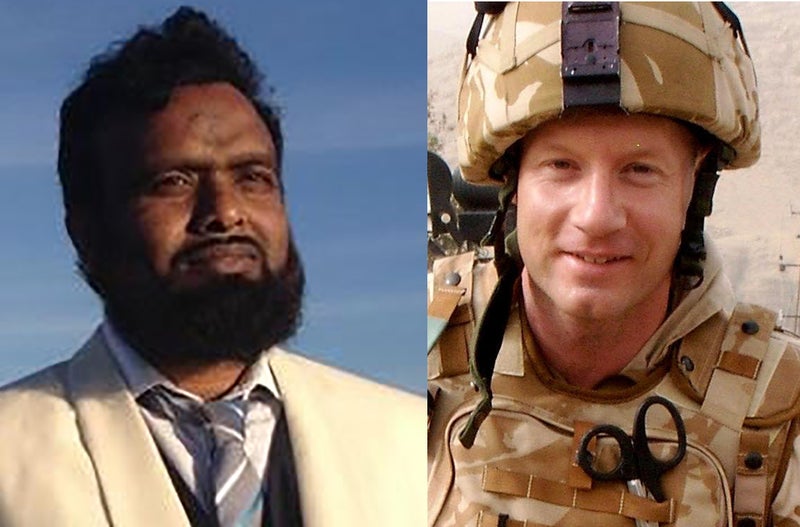
Dr Mainul Haque from the University of Portsmouth’s School of Mathematics and Physics has partnered with Royal Navy intensive Care consultant Timothy Scott to develop a computerised simulator.
The system is intended to facilitate research on treatments for primary blast lung injuries caused by exposure to the supersonic shock waves that radiate from an explosion. Researchers have so far relied on animal testing to assess new therapeutics, but this process is considered slow and costly.

Discover B2B Marketing That Performs
Combine business intelligence and editorial excellence to reach engaged professionals across 36 leading media platforms.
When a shock wave passes through the body, it can damage multiple internal organs without external signs of injury. There is not currently any protective clothing that can negate the effects and no established therapeutic model for deciding what type of mechanical ventilation or drug treatment will be most effective.
Dr Haque said: “A bomb blast greatly increases the air pressure nearby, resulting in a wave of highly pressured air radiating outwards from ground zero.
“Depending on the size and power of the explosion, the resulting shockwaves energise and damage material close by and, in people, the damage is concentrated mostly in the lungs.”
The new simulator model is expected to offer a cost-effective tool to test therapies for at-home and on-the-field treatment of blast lung injury patients.
Scott noted: “A computerised model allows us to run as many treatment trials as we need to for any type of scenario quickly and easily without the need for live animal research.”
The computerised model can simulate complete body systems, including reactions to the excess fluid that accumulates after injury or inflammation.
The system has been validated using the Joint Theatre Trauma Registry, a casualty database from the Afghanistan war, as well as human and animal data sets.


