
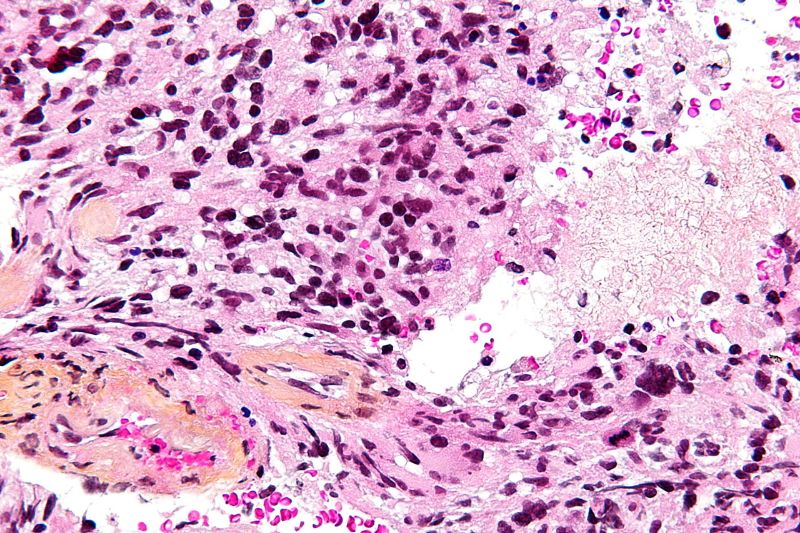
A new discovery by researchers at the University of Sussex in the UK has shown promise for facilitating a simple test to diagnose glioblastoma, the most aggressive brain tumour.
The researchers detected new biomarkers in body fluids that indicate the tumour. These biomarkers are related to extracellular vesicles, which are released by cells into body fluids in order to communicate with each other.
Go deeper with GlobalData


Discover B2B Marketing That Performs
Combine business intelligence and editorial excellence to reach engaged professionals across 36 leading media platforms.
Based on the finding, the team believes that a test for bodily fluids such as blood offers a simpler diagnostic approach than invasive and painful biopsy.
University of Sussex School of Life Sciences cancer cell signalling professor Georgios Giamas said: “At the moment, the outlook for glioblastoma patients is bleak. As the most aggressive type of brain tumour, survival rate is low.
“Our research provides more information about the markers which can signal the presence of glioblastoma, and the fact we’ve been able to identify ones that are associated with extracellular vesicles, suggests that there could be a way to use bodily fluids to test for the tumour in [the] future.”
Liquid biopsies, including blood tests, are being increasingly developed for diagnosing various types of cancer. Doctors will be able to analyse liquid biopsy samples for biomarkers that indicate the tumour subtype.
In addition to fast results, liquid biopsies offer a better follow-up care option, noted the university study’s co-author Dr Thomas Simon.
Simon added: “The more we know about biomarkers the better, so this is a step which should provide hope for anyone whose lives have been impacted by glioblastoma.”
The team believes that their discovery of biomarkers in extracellular vesicles could help in glioblastoma subtyping, which is considered important for prognosis and personalised treatment.
While the new biomarkers are yet to be assessed and validated in glioblastoma patients, the researchers believe that the approach could enable diagnosis of brain tumours in the future.



