
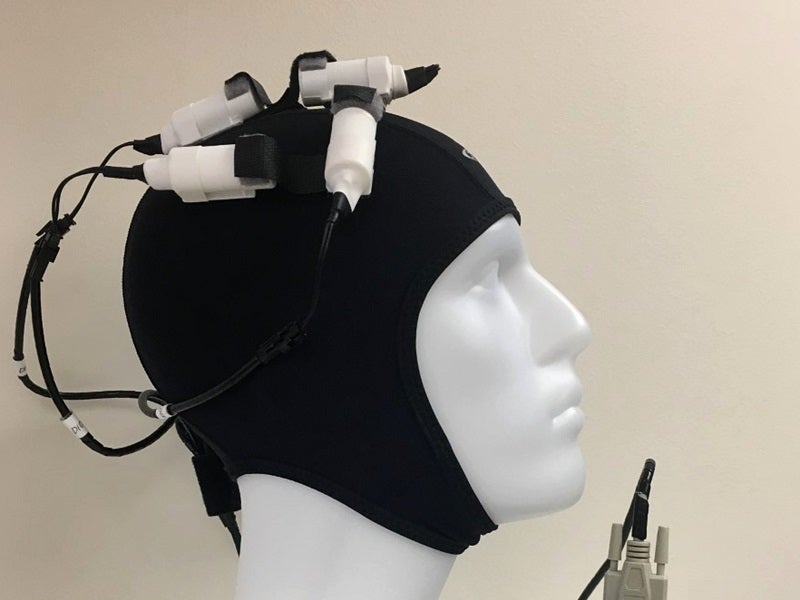
A non-invasive magnetic stimulation headset could improve motor function in stroke patients, a new study has found.
In a clinical trial of 30 patients who had survived chronic ischemic strokes, the transcranial rotating permanent magnet stimulator (TRPMS) produced significant increases in physiological brain activity in areas near the stroke site. Brain activity was measured using functional magnetic resonance imaging (fMRI).
Go deeper with GlobalData


Discover B2B Marketing That Performs
Combine business intelligence and editorial excellence to reach engaged professionals across 36 leading media platforms.
Houston Methodist Hospital Eddy Scurlock Stroke Center director Dr David Chiu said: “The robustness of the increase in physiological brain activity was surprising. With only 30 subjects, a statistically significant change was seen in brain activity.”
The participants in the study were all stroke survivors who experienced weakness on one side of their body at least three months post-stroke.
Half of them were treated with brain stimulation, administered in 20 40-minute sessions over four weeks. The rest received a sham treatment.
Researchers analysed brain activity before, immediately after and one month after the therapy was administered and found that active treatment produced nine times greater increases in brain activity than the sham treatment.
Alongside this, the patients who underwent the TRPMS treatment demonstrated numerical improvements in five of six clinical scales of motor function. The scales measured gait velocity, grip strength, pinch strength and other motor functions of the arm.
These effects persisted over a three-month follow up.
The researchers believe the results may signal that TRPMS treatment led to improved clinical motor function, although this could not be proven in the study. A multicentre trial sponsored by Seraya Medical, the patent holder of the TRPMS technology, is currently planned.
Chiu said: “If confirmed in a larger multicenter trial, the results would have enormous implications. This technology would be the first proven treatment for recovery of motor function after chronic ischemic stroke.”
The research was presented at the American Stroke Association’s International Stroke Conference 2020, which runs from 19 February to 21 February in Los Angeles. The study was funded by a grant from the Houston Methodist Research Institute Translational Research Initiative.



