
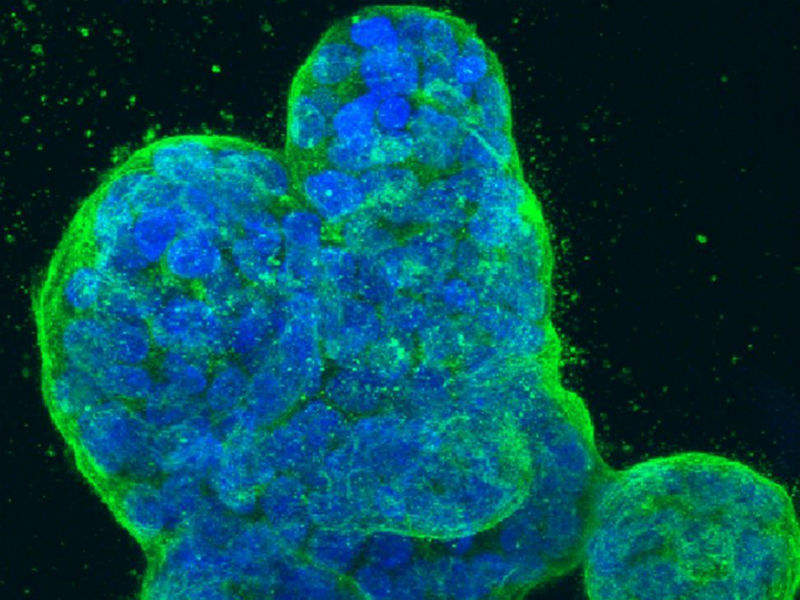
Israeli researchers have combined commercially existing, inexpensive breath and urines tests to accurately detect biomarkers of breast cancer in early stages.
The team from Ben-Gurion University of the Negev and Soroka University Medical Center used two different electronic nose (e-nose) gas sensors to analyse breath and gas-chromatography mass spectrometry (GC-MS) for quantification of substances in urine.
Go deeper with GlobalData


Discover B2B Marketing That Performs
Combine business intelligence and editorial excellence to reach engaged professionals across 36 leading media platforms.
While the e-nose demonstrated an average of 95% accuracy in detecting unique breath patterns in breast cancer patients, a revamped GC-MS had 85% average accuracy for statistical analyses of urine samples.
Ben-Gurion University Biomedical Engineering department professor Yehuda Zeiri said: “Breast cancer survival is strongly tied to the sensitivity of tumour detection; accurate methods for detecting smaller, earlier tumours remain a priority.
“Our new approach utilising urine and exhaled breath samples, analysed with inexpensive, commercially available processes, is non-invasive, accessible and may be easily implemented in a variety of settings.”
Current approaches for the diagnosis of breast cancer are said to have significant drawbacks such as more radiation exposure with dual-energy digital mammography, and invasive biopsies.
US Tariffs are shifting - will you react or anticipate?
Don’t let policy changes catch you off guard. Stay proactive with real-time data and expert analysis.
By GlobalDataEven though mammography screenings were found to significantly decrease breast cancer related mortality rates, they are limited due to an incapability to identify small tumours in dense breast tissue.
Zeiri added: “We’ve now shown that inexpensive, commercial electronic noses are sufficient for classifying cancer patients at early stages.
“With further study, it may also be possible to analyse exhaled breath and urine samples to identify other cancer types, as well.”



