
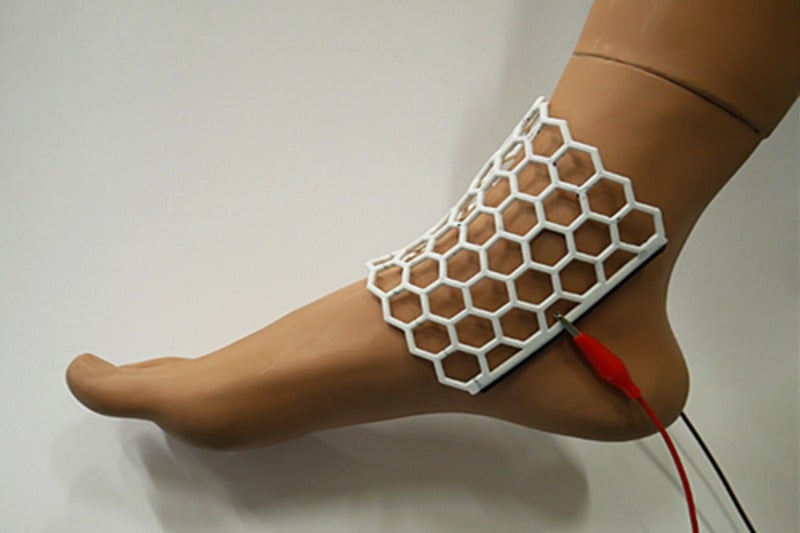
University of Bristol scientists have initiated a three-year FREEHAB project to develop soft rehabilitative devices in an effort to aid people with mobility problems.
Jonathan Rossiter, robotics professor at the university, will lead the research. It leverages his team’s prior work which has yielded new soft materials for use as artificial muscles.
Go deeper with GlobalData


Discover B2B Marketing That Performs
Combine business intelligence and editorial excellence to reach engaged professionals across 36 leading media platforms.
Currently, more than 10.8 million people are living with disabilities in the UK and nearly 6.5 million suffer from mobility impairments.
Rossiter noted: “These numbers are growing as the median population age increases and age-related mobility issues due to conditions such as arthritis and stroke become more prevalent.”
According to the professor, absence of easy-to-use tools for accurate analysis of mobility performance poses a challenge to determine effective rehabilitation programmes.
Rossiter further highlighted the need for approaches to support in-home mobility and training.

US Tariffs are shifting - will you react or anticipate?
Don’t let policy changes catch you off guard. Stay proactive with real-time data and expert analysis.
By GlobalDataThe researchers developed the artificial muscles using 3D-printable electroactive gel materials, along with soft pneumatic chains that can change shape upon inflation and exert considerable force.
They intend to incorporate sensing technology into the new rehabilitative devices to facilitate accurate identification of limitations in patients’ movements and allow personalised training programmes.
Rossiter added: “We will also make simpler devices that the patient can use to enhance their mobility activities and exercise with confidence when a therapist is not with them.”
As part of the FREEHAB project, the university team plans to work with physiotherapists at the NHS and private practices, as well as people who have received physiotherapy for mobility issues.
The researchers also plan to assess the new devices in clinical trials prior to their launch in the supply chain.
Scheduled to begin in September this year, the project secured Engineering and Physical Sciences Research Council (EPSRC) funding of £1.16m.



