
Researchers at the Broad Institute of MIT and Harvard in the US have improved their CRISPR-based diagnostic tool called SHERLOCK to feature higher sensitivity and capability to simultaneously detect various targets.
The test will now be able to rapidly and accurately identify genetic signatures of pathogens, viruses tumour DNA, or any other compound of interest.
Go deeper with GlobalData


Discover B2B Marketing That Performs
Combine business intelligence and editorial excellence to reach engaged professionals across 36 leading media platforms.
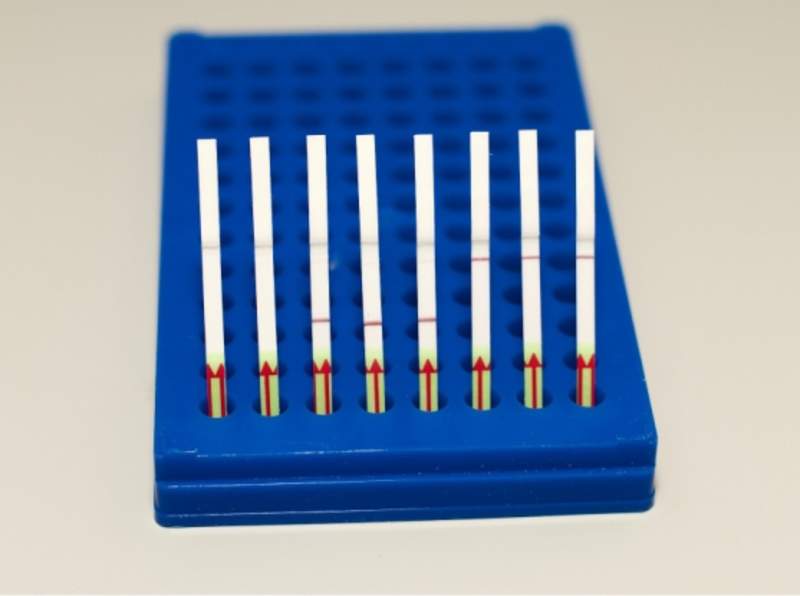
Originally launched in April last year, the tool has been advanced into a miniature paper strip test, where results can be visualised with the naked eye instead of expensive equipment.
When dipped into a processed sample, the strip shows a line that indicates the presence or absence of a molecule. This new capability is expected to lead to field use of the test, including during an outbreak.
Broad Institute core institute member Feng Zhang said: “SHERLOCK provides an inexpensive, easy-to-use, and sensitive diagnostic method for detecting nucleic acid material – and that can mean a virus, tumour DNA, and many other targets.
“The SHERLOCK improvements now give us even more diagnostic information and put us closer to a tool that can be deployed in real-world applications.”
US Tariffs are shifting - will you react or anticipate?
Don’t let policy changes catch you off guard. Stay proactive with real-time data and expert analysis.
By GlobalDataZang and team tested SHERLOCK in a new study to identify cell-free tumour DNA in blood samples obtained from lung cancer patients, and to simultaneously detect synthetic Zika and Dengue virus.
The ability of the tool to detect nucleic acid targets is expected to be useful in various healthcare applications such as diagnosis of infections and detections of mutations involved with drug resistance or cancer.



