
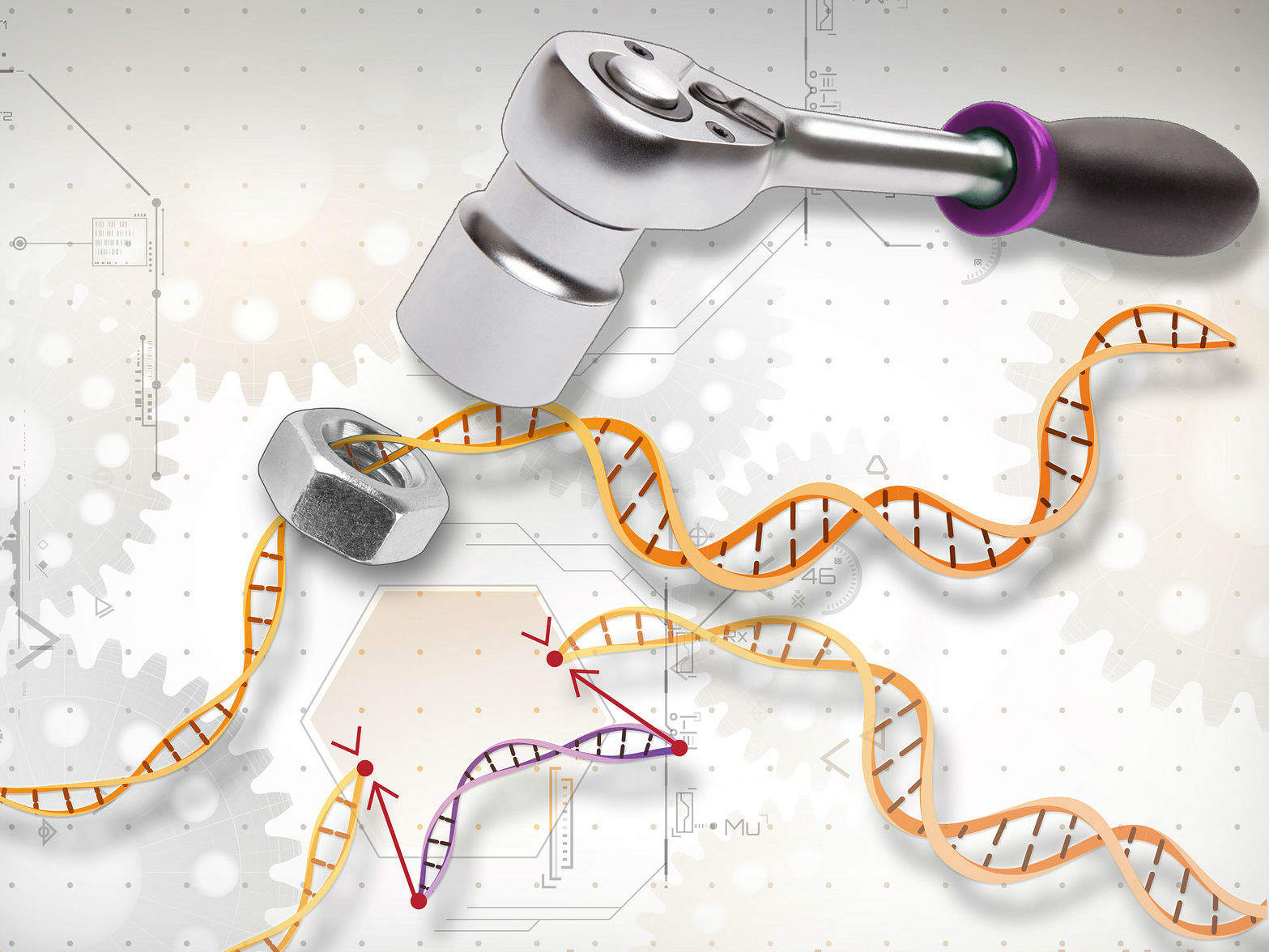
Scientists from Stanford University in the US have developed a technique that could dramatically speed up cancer research and drug development with combined CRISPR and DNA barcoding that can track cancer growth.
The researchers discovered that they could modify pairs of cancer-related genes in the lungs of a mouse model so that they could then precisely track individual cells of the resulting tumour. This work could allow scientists to mimic and study the genetic diversity of tumour cells outside of the lab.
Go deeper with GlobalData


Discover B2B Marketing That Performs
Combine business intelligence and editorial excellence to reach engaged professionals across 36 leading media platforms.
Stanford University School of Medicine geneticist and senior author of the study Monte Winslow said: “Human cancers don’t have only one tumour-suppression mutation – they have combinations. The question is, how do different mutated genes cooperate or not cooperate with one another?”
Due to recent technological advancements, Winslow and his team conducted their experiment in a matter of months with fewer than two dozen mice when a few years ago such a study would have taken years and thousands of mice. The team claims to have analysed more genotypes of lung cancer tumours in mice than the whole field has in 15 years.
They achieved their results using the gene editing tool CRISPR-Cas9 to create multiple, genetically distinct tumours in the lungs of individual mice. Short unique sequences of DNA were then attached to the individual tumour cells. Each sequence functioned as a heritable genetic barcode which meant that as each cancer seed cell divided and grew into a new tumour, the number of barcodes which match the seed cell barcode multiplies.
The scientists then took entire mouse lungs, ground them and used high-throughput DNA sequencing and computational analysis to precisely determine how big a tumour was by counting how often its barcodes appeared. Keeping count of the different barcodes enabled the scientists to compare tumour sizes much more quantitatively than previously possible.

US Tariffs are shifting - will you react or anticipate?
Don’t let policy changes catch you off guard. Stay proactive with real-time data and expert analysis.
By GlobalDataDmitri Petrov, an evolutionary biologist at Stanford, said: “This is ten steps forward in our ability to model human cancer. We can now generate a very large number of tumours with specific genetic signatures in the same mouse and follow their growth individually at scale and with high precision. The previous methods were both orders of magnitude slower and much less quantitative.”
Combining CRISPR-Cas9 with this technique could allow scientists to replicate the kind of genetic diversity observed in cancer patients in a laboratory setting.
The mapping study also found that tumour suppressor genes are context-dependent and so only affect cancer growth in the presence or absence of another gene.
The team’s hybrid technique could prove valuable for cancer drug testing. Pharmaceutical companies could test a drug on thousands of tumour variations simultaneously to see which ones respond to treatment. The researchers hypothesise that the genetic identity of tumours might be partially responsible for why targeted therapies and immunotherapies work in some patients but not in others.



