
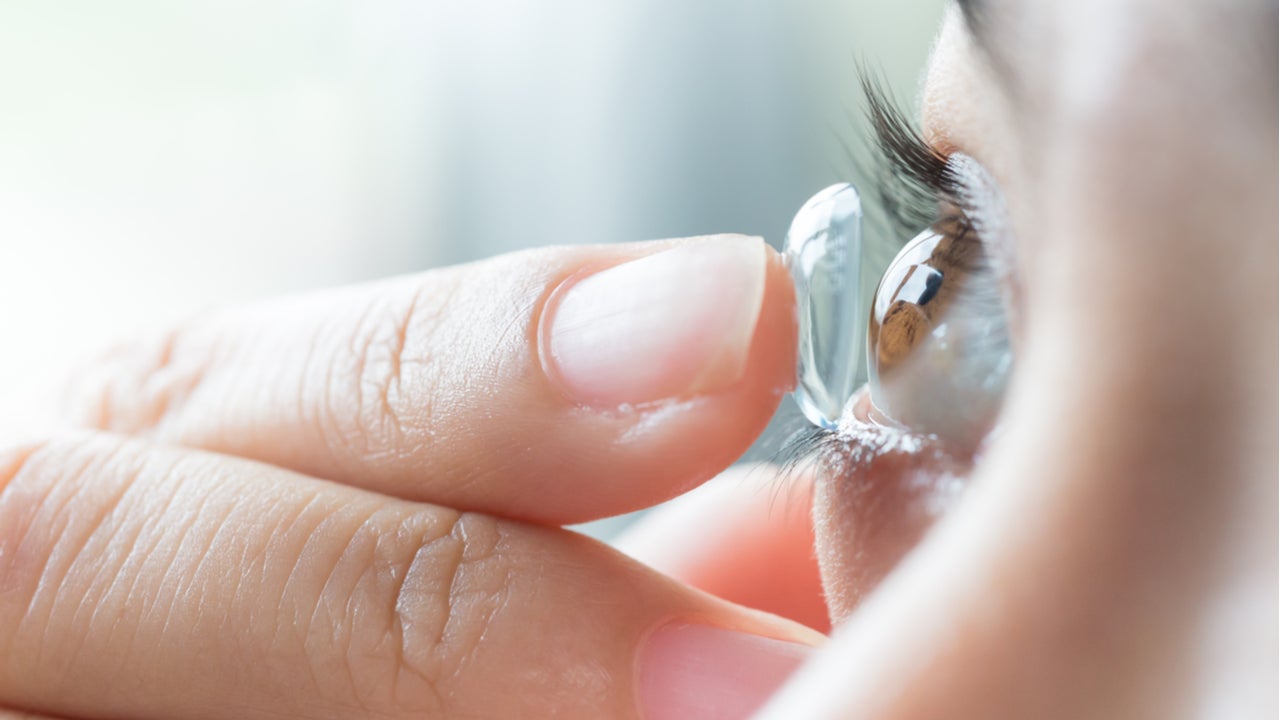
A newly-published paper in Contact Lens and Anterior Eye has reviewed innovative uses for contact lenses in disease detection and therapy, drug delivery, vision enhancement and more.
The paper represents one of the most comprehensive reviews of potential future advancements in contact lenses.
Go deeper with GlobalData


Discover B2B Marketing That Performs
Combine business intelligence and editorial excellence to reach engaged professionals across 36 leading media platforms.
The University of Waterloo’s Centre for Ocular Research & Education director Lyndon Jones said: “There are a range of diverse technologies that are shaping the future of contact lenses, in some cases already showing their potential in late-stage development initiatives and even commercially-available products.”
The paper predicts that the presence of biomarkers in tear film will give rise to diagnostic contact lenses to help detect and monitor systemic and ocular diseases, including diabetes, cancer, and dry eye disease.
Ocular disease treatment and management may also benefit from progress made in the fields of fluid dynamics, materials science and microelectronics.
For example, dehydration-resistant materials combined with electro-osmotic flow and reactive oxygen species-scavenging materials inside a lens could offer alternative dry eye disease therapies.
Liquid crystal cells could also replicate the functionality of the pupil and iris, autonomously filtering incoming light to overcome physiological disease defects.
Embedded spectral filtering even has the potential to mitigate colour vision deficiencies.
The paper also posits that integrated circuit developments may give rise to in-lens intraocular pressure monitoring for glaucoma and even retinal vasculature imaging, enabling early detection of diseases such as hypertension, stroke and diabetes.
Drug-delivering contact lenses may be able to offer more accurate dosing than traditional eye drops, whether through in vitro uptake and release, incorporation of drug-containing nanoparticles into contact lens materials or molecular imprinting to imbue polymers with memory characteristics that aid dispensation.
Customised optics could address aberrated eyes, with the front surface of a lens shaped to specifically reduce measured aberrations based on each person’s unique corneal shape.
Embedded microelectronics might constantly monitor corneal gaze direction, controlling optical elements to address presbyopia – the gradual loss of the eyes’ ability to focus – in real time.
Myopia control lenses are also being used slow axial growth in children, responding to one of the most pressing issues in eye health today.
Finally, the study found that advances in optical and digital display hold the potential for assisting people who suffer from low vision, and then extend to the general population to replace or supplement traditional screens.
Jones said: “Novel biomaterials, nanotechnology progress, unique optical designs, biosensing discoveries, antibacterial agents and even battery miniaturisation and power transfer are coalescing like never before. The next several years will see incredible advancements and growth for an expanded contact lens category.”



