
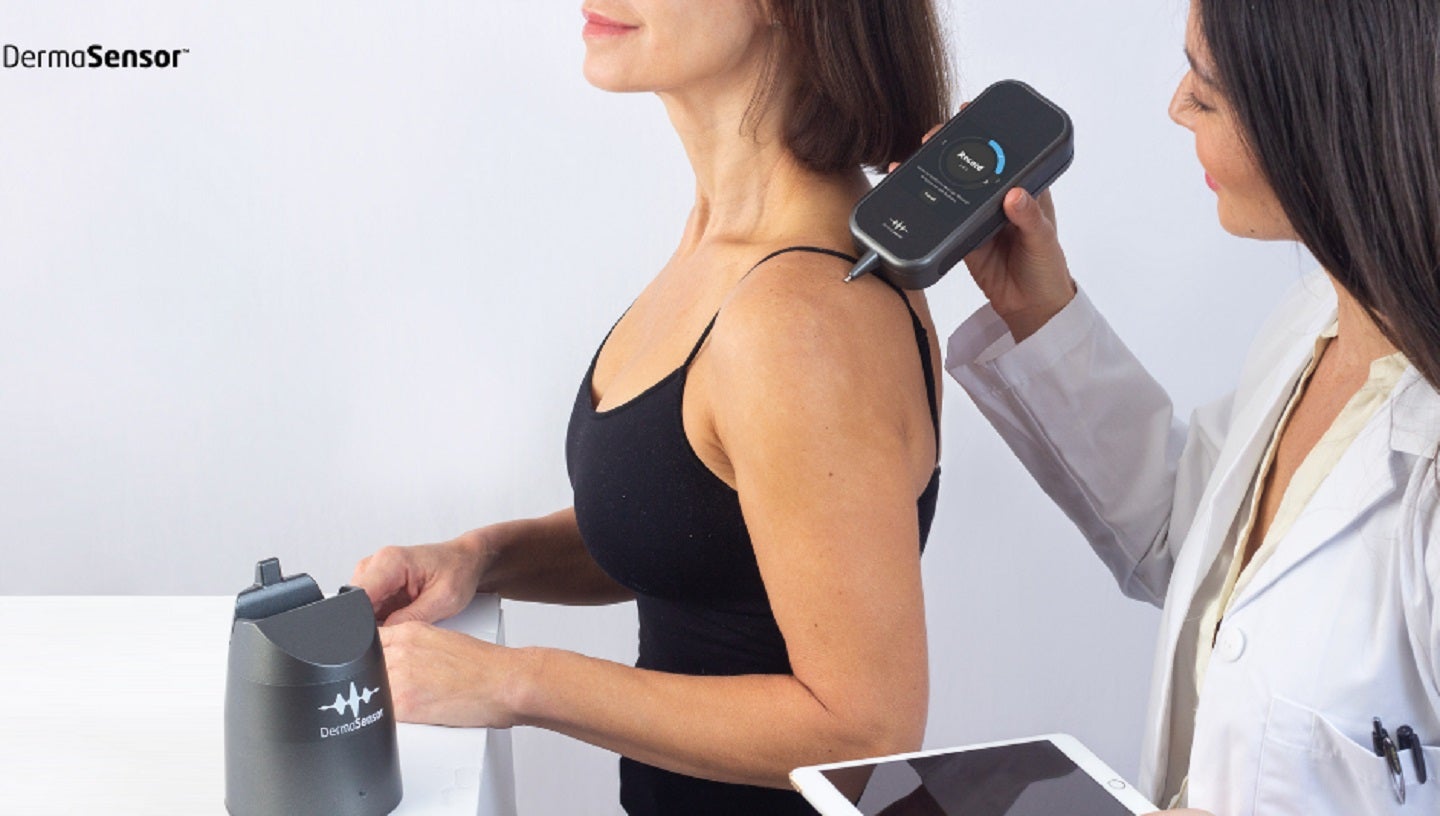
Health technology company DermaSensor has reported pooled analysis from two clinical trials of its device for detecting skin cancer.
The performance of the DermaSensor device was evaluated by the company in the DERM-ASSESS III and DERM-SUCCESS trials.
Go deeper with GlobalData


Discover B2B Marketing That Performs
Combine business intelligence and editorial excellence to reach engaged professionals across 36 leading media platforms.
The device correctly classified 338 high-risk lesions with a 94% sensitivity and 1,681 low-risk lesions with a 23% specificity.
The lesions were all biopsied by physicians for suspected skin cancer.
Additionally, in the DERM-SUCCESS pivotal study, the device met its primary endpoint of having higher sensitivity compared to primary care physicians (PCPs) for all common skin cancers.
DermaSensor CEO Cody Simmons said: “It is an honour to have been selected to present data at the AAD from our two major clinical validation studies, which are two of our four studies serving as principal support for our FDA submission.
“Having spent a decade miniaturising and conducting studies with our spectroscopy technology, we hope to soon equip PCPs in the US with our handheld, wireless device in order to improve their detection and referral of skin cancer, which is more common than all other cancers combined.”
Designed as an objective, non-invasive tool, the DermaSensor device can be used by PCPs during an exam for rapid, point-of-care evaluation of lesions suggestive of skin cancer.
For the DERM-ASSESS III and DERM-SUCCESS trials, more than 2,000 suspicious lesions were biopsied across 32 study centres.
The DERM-ASSESS III study found a device sensitivity of 96% for detecting melanoma in the dermatology setting across ten dermatology centres.
It also classified 32.5% of benign lesions that were biopsied by the study dermatologists for suspicion of melanoma accurately.
With 22 primary care study centres, the DERM-SUCCESS pivotal study demonstrated 96% device sensitivity for all skin cancers in the primary care setting.
The specificity of the device for correctly classifying benign lesions biopsied by the physicians was found to be 21%.
The device negative predictive values (NPV) and positive predictive values (PPV) were 97% and 17%, respectively, indicating that one in six lesions with a positive device result were cancerous.
No device-related safety issues were reported in either trial.
Investigators and authors from the Mayo Clinic, Yale School of Medicine, Harvard School of Medicine, University of Connecticut, Trinity University, Florida State University, and the Medical College of Georgia were included in the trials.



