
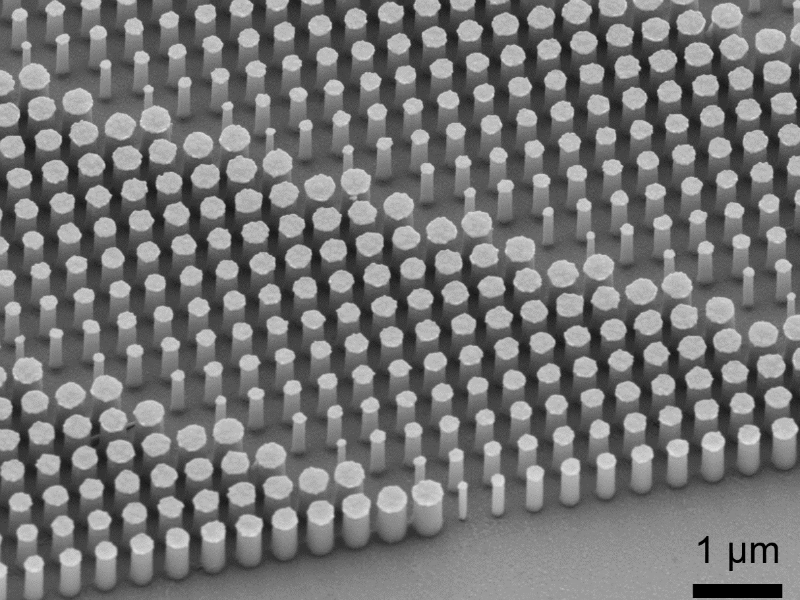
Experts in endoscopic imaging at Massachusetts General Hospital (MGH) and the creators of flat metalens technology at the Harvard John A. Paulson School of Engineering and Applied Sciences (SEAS) have collaborated to develop a new kind of endoscopic imaging catheter that could overcome the limitations of current systems.
The nano-optic endoscopes have been designed to better detect tissue diseases, including cancer. Research describing the technology has been published in Nature Photonics.
Go deeper with GlobalData


Discover B2B Marketing That Performs
Combine business intelligence and editorial excellence to reach engaged professionals across 36 leading media platforms.
Harvard Medical School (HMS) and MGH assistant professor and co-senior author of the paper Melissa Suter said: “Clinical adoption of many cutting-edge endoscopic microscopy modalities has been hampered due to the difficulty of designing miniature catheters that achieve the same image quality as bulky desktop microscopes.
“The use of nano-optic catheters that incorporate metalenses into their design will likely change the landscape of optical catheter design, resulting in a dramatic increase in the quality, resolution, and functionality of endoscopic microscopy. This will ultimately increase clinical utility by enabling more sophisticated assessment of cell and tissue microstructure in living patients.”
SEAS professor and co-senior author of the paper Federico Capasso added: “Metalenses based on flat optics are a game-changing new technology because the control of image distortions necessary for high-resolution imaging is straightforward compared to conventional optics, which requires multiple complex shaped lenses.
“I am confident that this will lead to a new class of optical systems and instruments with a broad range of applications in many areas of science and technology.”

US Tariffs are shifting - will you react or anticipate?
Don’t let policy changes catch you off guard. Stay proactive with real-time data and expert analysis.
By GlobalDataCollecting biopsy samples to diagnose internal organ diseases is highly error-prone due to the inability of current endoscopic techniques to accurately visualise sites of disease. Conventional optical catheter elements are prone to aberrations that obstruct imaging quality.
MBH and MHS instructor in medicine Hamid Pahlevaninezhad, co-first author of the paper, added: “The versatility and design flexibility of the nano-optic endoscope significantly elevates endoscopic imaging capabilities and will likely impact diagnostic imaging of internal organs. We demonstrated an example of such capabilities to achieve high-resolution imaging at greatly extended depth of focus.”
The researchers imaged fruit flesh, swine and sheep airways, and human lung tissue to demonstrate the imaging quality of the endoscope. This enabled them to show that the device can image deep into tissue with a significantly higher resolution than current imaging catheters.
In the human lung tissue, the nano-optic endoscope was able to clearly identify structures that correspond to fine, irregular glands indicating the presence of adenocarcinoma, the most common type of lung cancer.
SEAS postdoctoral fellow and co-first author of the paper Yao-Wei Huang said: “Currently, we are at the mercy of materials that we have no control over to design high-resolution lenses for imaging.
“The main advantage of the metalens is that we can design and tailor its specifications to overcome spherical aberrations and astigmatism and achieve very fine focus of the light. As a result, we achieve very high resolution with extended depth of field without the need for complex optical components.”
Next, the researchers are planning to explore other applications for the technology, such as the creation of a polarisation-sensitive nano-optic endoscope.



