
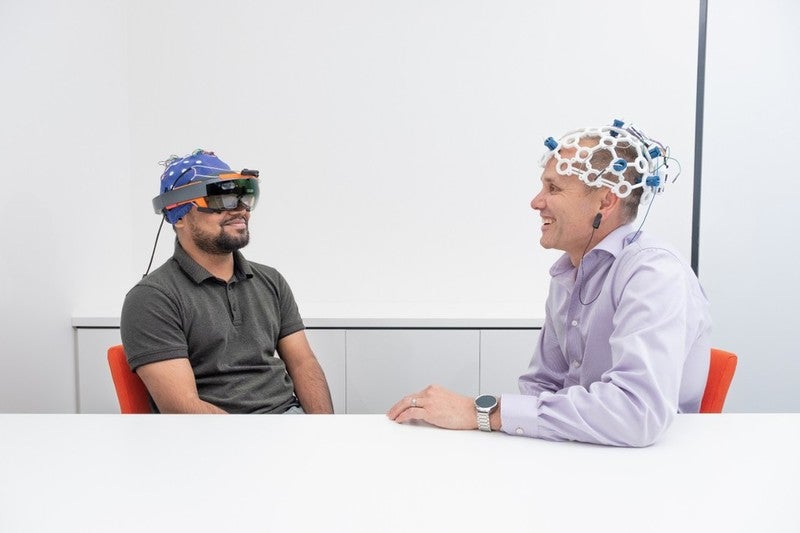
US-based technology company Microsoft has awarded an Artificial Intelligence (AI) for Accessibility grant to the University of Sydney in Australia to support the development of an epilepsy prediction device.
Named NeuroSyd, the device will be designed to act as a seizure warning system via real-time monitoring and processing of brain-signals that indicate an epileptic seizure.
Go deeper with GlobalData


Discover B2B Marketing That Performs
Combine business intelligence and editorial excellence to reach engaged professionals across 36 leading media platforms.
Primarily intended to help adult epilepsy patients while driving, the device will provide an early warning of the possibility of an epileptic seizure strike. This is expected to facilitate measures to potentially avoid consequences that come with an unpredictable seizure.
University of Sydney electrical engineering faculty Dr Omid Kavehei said: “This research project is designed to provide a greater degree of independence to a specific cohort of individuals living with epilepsy, that will help better manage against the seemingly unpredictable nature of seizures.”
For the research project, Microsoft’s AI and machine learning capabilities will be combined with university’s expertise in electronics and biomedical signal processing.
In addition, the university researchers will work with the Royal Price Alfred Hospital and the Cerebral Palsy Alliance of NSW to develop the epilepsy prediction device.
US Tariffs are shifting - will you react or anticipate?
Don’t let policy changes catch you off guard. Stay proactive with real-time data and expert analysis.
By GlobalDataMicrosoft Australia accessibility lead David Masters noted: “Using state of the art AI and machine learning and current and historical data on brain activity, the team hopes to create a portable, non-surgical device that can provide someone with up to 30 minutes’ warning about a likely seizure.”
Nearly 65 million people are suffering with epilepsy globally, including around 250,000 individuals in Australia.
The condition could be effectively managed with first or second anti-epileptic drugs in many patients. However, failure of these medicines significantly decreases the chance of responding to further drugs, resulting in drug resistant epilepsy in approximately 30% of patients.



