
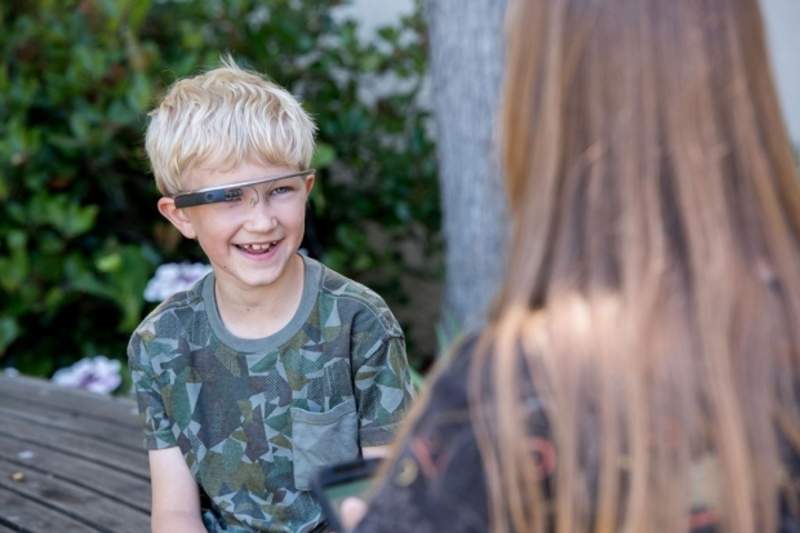
A pilot study by the Stanford University School of Medicine has found that Google Glass, in combination with a smartphone app, can improve social skills in children with autism by helping them better read people’s facial expressions.
Google Glass features a glasses-like frame with a camera to record the wearer’s field of view, along with a small screen and a speaker that provide visual and audio information to the user.
Go deeper with GlobalData


Discover B2B Marketing That Performs
Combine business intelligence and editorial excellence to reach engaged professionals across 36 leading media platforms.
The device can be connected to the smartphone app via a local wireless network. The app was designed by the university and uses machine learning to offer real-time hints on the emotions conveyed through people’s expression to a child using Google Glass.
During the study, parents of the participating children reported more eye contact after regular use of the therapy for one to three months. They further said that the children related better to others.
The treatment is expected to improve autism care, which currently requires diagnosed children to wait for nearly 18 months to receive treatment due to a shortage of trained therapists.
Stanford University School of Medicine paediatrics and of biomedical data science associate professor Dennis Wall said: “We have too few autism practitioners. The only way to break through the problem is to create reliable, home-based treatment systems. It’s a really important unmet need.”
US Tariffs are shifting - will you react or anticipate?
Don’t let policy changes catch you off guard. Stay proactive with real-time data and expert analysis.
By GlobalDataCalled Superpower Glass, the new therapy is based on an established autism treatment called applied behaviour analysis, during which children are taught to recognise emotion via structured exercises.
The researchers trained the smartphone app using numerous photos of faces showing eight different expressions. A mechanism has also been included to allow participants in the study to calibrate the app to their own ‘neutral’ faces.
Currently, the team is conducting a larger randomised trial of the therapy, with plans for further assessment in recently diagnosed children who are on a waiting list for autism treatment.



