
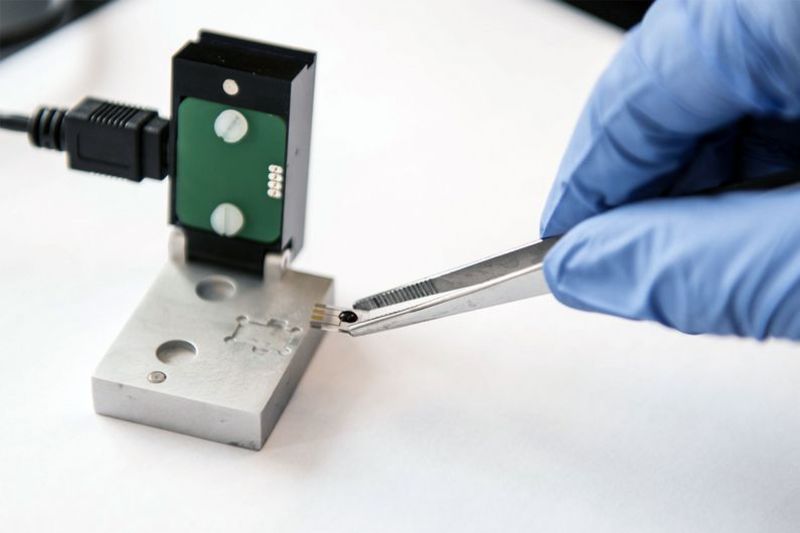
Researchers at Université de Montréal (UdeM)’s Laboratory of Biosensors & Nanomachines in Canada have partnered with Nanogenecs Diagnostics to develop an at-home blood testing device to monitor chronic illnesses.
The partners have secured a C$700,000 ($520,667) NSERC ‘Idea to Innovation’ grant to support the development of the device.
Go deeper with GlobalData


Discover B2B Marketing That Performs
Combine business intelligence and editorial excellence to reach engaged professionals across 36 leading media platforms.
Initially, the team aims to design the biosensor to identify urea, potassium and creatinine biomarkers using a drop of blood. Monitoring of these biomarkers is essential for kidney and heart disease patients.
Laboratory of Biosensors & Nanomachines head Alexis Vallée-Bélisle said: “After blood samples are collected in a hospital or clinic, they get sent to a central analysis lab, which is typically located off-site, then the results are forwarded to the doctor and finally shared with the patient.
“Our technology aims to change that, so that patients and doctors can get immediate results as part of everyday monitoring. This will allow them to take fast action if something is out of range.”
Vallée-Bélisle noted that the blood testing device’s prototype can already identify blood urea levels. The team is currently developing electrodes for potassium and creatinine measurement.
US Tariffs are shifting - will you react or anticipate?
Don’t let policy changes catch you off guard. Stay proactive with real-time data and expert analysis.
By GlobalDataUltimately, the device is expected to allow patients living with chronic illnesses to monitor their condition daily and electronically send the results to their doctors.
Vallée-Bélisle added: “We believe that, like diabetics with blood glucose meters, patients with other chronic illnesses would benefit greatly from home blood testing, especially during periods when their condition is unstable.
“This more preventative and personalised form of care could clearly improve their quality of life.”
The device requires further testing to validate its accuracy. It blood urea sensing capabilities are being assessed in a hospital setting.
Following completion of testing, the researchers intend to develop a low-cost, portable version of the device.



