
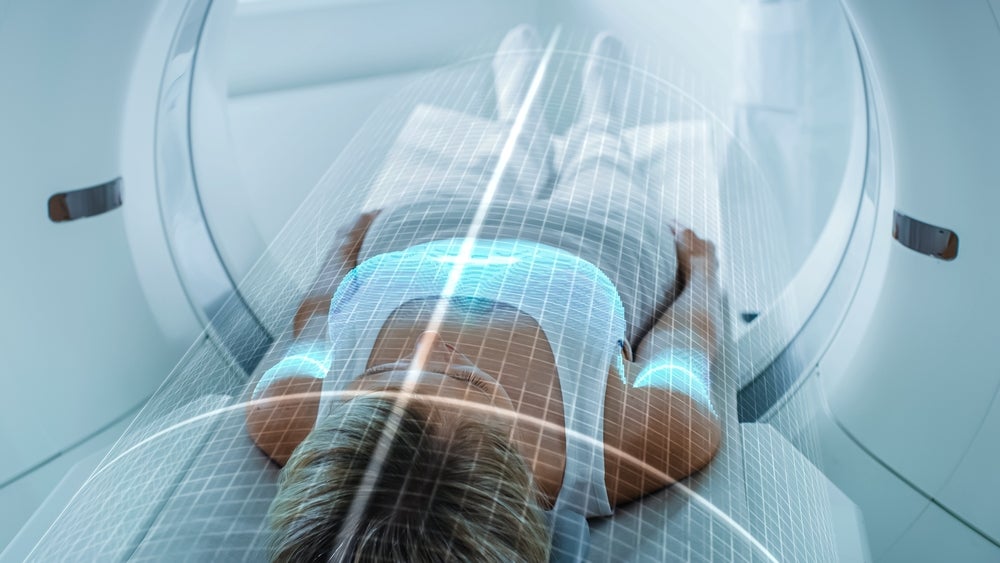
An Israeli hospital has used AI to identify calcium in the coronary arteries of CT scan patients, with the use of a deep learning algorithm.
The Tel Aviv-based hospital found, through using AI tools, that 58% of patients they examined had unknowingly acquired medium to severe calcium build-ups in the coronary artery- an indicator of cardiac issues.
Go deeper with GlobalData


Discover B2B Marketing That Performs
Combine business intelligence and editorial excellence to reach engaged professionals across 36 leading media platforms.
The tools, developed by Nano-x Imaging (Nanox) and dubbed as HealthCCS, utilise medical imaging data from routine chest CT scans to automatically quantify and analyse the build-up of calcium in the coronary artery (CAC).
Ashraf Hamdan, Head of Cardiovascular Imaging at Beilinson Hospital, said: “The outcomes have been highly promising in terms of detecting previously undiagnosed patients with elevated calcium levels from routine chest CT scans.
“Even within our health-conscious population, we were able to identify a significant number of individuals with hidden cardiovascular disease and guide them onto the appropriate care trajectory.”
Among the 326 eligible patients who participated in the study from January to July 2023, 101 out of 326 (31%) exhibited severe CAC, 88 had moderate CAC, and 137 showed low CAC.
Traditional methods of checking for CAC involve additional expense as well as exposing patients to radiation, using AI presents a somewhat less invasive method, additionally keeping costs down.
Orit Wimpfheimer, Chief Medical Officer of Nanox, said: “HealthCCSng’s ability to detect hidden cardiovascular risks from routine CT scans offers a significant stride toward preventive cardiac care.
“Given the global prominence of cardiovascular disease as the leading cause of mortality and the fact that nearly half of patients realise their condition only after an initial heart attack, leveraging such technologies for general population screening and early detection is absolutely imperative.”
Elsewhere, in Japan, AI is similarly being used to carry out molecular testing to determine the tumour microenvironment and HER2 expression levels of certain breast cancer patients. In hospital management, ApolloMD, a group of over 1,500 US physicians, has deployed Fathom’s AI-based medical coding technology to improve its revenue cycle and reduce costs.



