
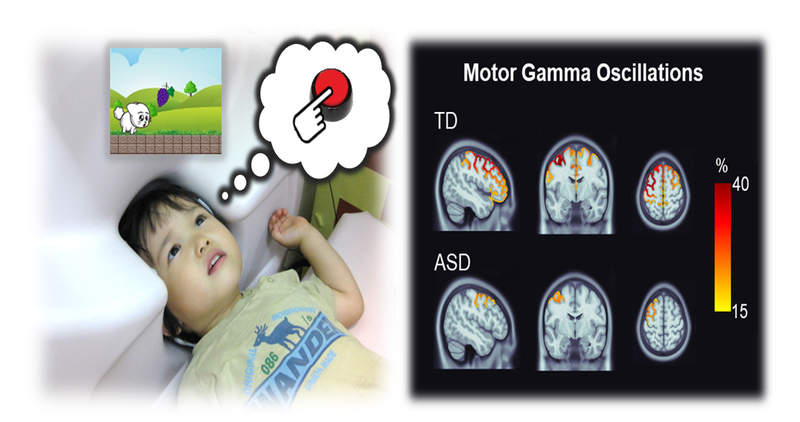
A team of researchers at Kanazawa University in Japan have identified a potential quantifiable biomarker for diagnosing autism spectrum disorder (ASD).
They used magnetic brainwave imaging to correlate altered gamma oscillation with the motor response of children with ASD.

Discover B2B Marketing That Performs
Combine business intelligence and editorial excellence to reach engaged professionals across 36 leading media platforms.
This is consistent with previous key hypotheses on the disease that autism results from an excitatory and inhibitory imbalance in the brain, which is associated with repetitive gamma oscillations.
Researchers observed a reduction in this type of brain activity during visual, auditory, and tactile stimulation in individuals with ASD.
Two groups of children aged from five to seven years were formed for the research.
In the first group, children were conventionally diagnosed with ASD, while the second group included children classed as developing typically.
US Tariffs are shifting - will you react or anticipate?
Don’t let policy changes catch you off guard. Stay proactive with real-time data and expert analysis.
By GlobalDataEach of them was given a video-game-like task that included pressing of a button with their right finger when they are relaxed.
The children’s brainwaves were monitored during the task using magnetoencephalography, which records magnetic activity from neurons.
Study corresponding author Mitsuru Kikuchi said: “We measured the button response time, motor-evoked magnetic fields, and motor-related gamma oscillations.
“As found in other studies, the ASD children’s response time was slightly slower and the amplitude in their magnetic fields was a bit decreased. The gamma oscillations were where we saw significant and interesting differences.”
The motor task was developed for child participants who performed the motor task involving the 100 button-press, while a whole-head MEG child system was recorded.
Study first author Kyung-min An said: “These findings may prove to be extremely useful in helping us understand the neurophysiological mechanism behind social and motor control development in children with ASD.
“Using magnetoencephalography in this way gives us a noninvasive and quantifiable biomarker, which is something we are in great need of.”


