
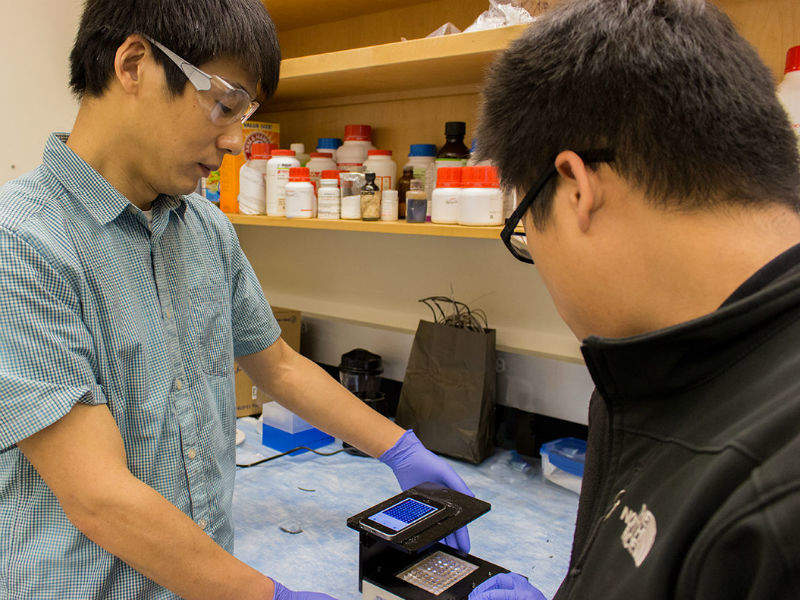
Researchers from Washington State University (WSU) in the US have invented a portable laboratory-on-phone device to quickly test for common bacterial and viral infections.
The smartphone reader works by taking a picture of 96 sample wells at a single time and analyses their colour by utilising a computer programme in order to determine positive or negative results.
Go deeper with GlobalData


Discover B2B Marketing That Performs
Combine business intelligence and editorial excellence to reach engaged professionals across 36 leading media platforms.
It was found to be capable of detecting 12 infectious diseases, including mumps, measles, herpes and Lyme disease.
When used to test 771 patient samples obtained from Hospital of University of Pennsylvania, the device demonstrated 97%-99.9% accuracy, with only around 1% of false positives.
The team hopes that the new device can help in providing quicker and low-cost diagnosis in fast-moving viral and bacterial epidemic regions that lack laboratory equipment and medical personnel.
In rural or underserved areas, healthcare professionals diagnose infections based on patient’s symptoms or use their own judgement to determine results from test sample colour, leading to inaccurate diagnosis.
Even if the results are sent to a lab in a neighbouring city, it may take several days to get the diagnosis, resulting in the spread of infection.
Washington State University School of Mechanical and Materials Engineering assistant professor Lei Li said: “This smartphone reader has the potential to improve access and speed up healthcare delivery.
“If we find out about infections, we can treat them more quickly, which makes a difference especially in low-resource, remote areas.”
The development of the device is said to have cost approximately $50, and the researchers expect it will cost even less to manufacture.



