
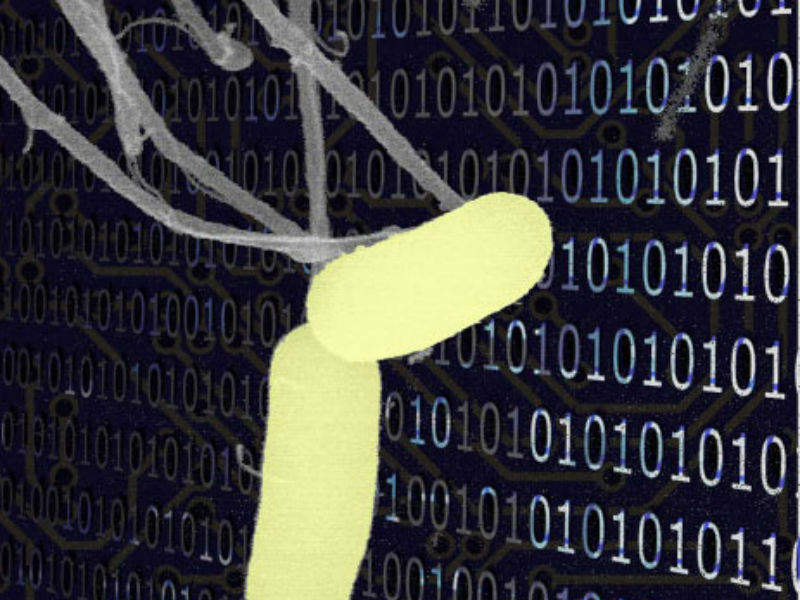
A team of international researchers has developed a new machine learning tool to enable the detection of dangerous emerging strains of Salmonella even before the occurrence of an outbreak.
Led by a scientist at the UK-based Wellcome Sanger Institute, the team included researchers from New Zealand’s University of Otago and German Helmholtz Institute for RNA-based Infection Research.
Go deeper with GlobalData


Discover B2B Marketing That Performs
Combine business intelligence and editorial excellence to reach engaged professionals across 36 leading media platforms.
The tool is said to speed up the process of identifying the genetic changes associated with new invasive types of Salmonella that are of concern to public health.
It can provide an alternative for existing genetic adaptation detection approaches that are considered time-consuming and mostly require manual interference to identify emerging bacteria strains.
The researchers created the machine learning tool to gain better insights into mutations that can determine if an emerging strain of Salmonella enterica will cause food poisoning or a severe infection.
They used old lineages of evolutionarily distinct Salmonella, including seven gastrointestinal strains and six invasive infection-causing bacteria, to train the tool.
US Tariffs are shifting - will you react or anticipate?
Don’t let policy changes catch you off guard. Stay proactive with real-time data and expert analysis.
By GlobalDataThe model is said to have successfully identified around 200 genes that help in detecting whether the bacterium will lead to food poisoning or is better adapted to cause a more invasive condition.
Wellcome Sanger Institute researcher Dr Nicole Wheeler said: “Using this tool, we can tackle massive data sets and get results in seconds.
“Ultimately, this work will have a big impact on the surveillance of dangerous bacteria in a way we haven’t been able to before, not only in hospital wards but at a global scale.”
Upon testing with currently emerging Salmonella strains in Sub-Saharan Africa, the tool was able to accurately indicate two dangerous types from a pool of common infections.
The tool further identified genetic changes that allowed the bacterium strains to adapt and become more invasive. This capability is expected to aid in the development of more effective therapies.
In addition to Salmonella, the model can be used to investigate other factors such as emerging antibiotic resistance in any bacterium.



