
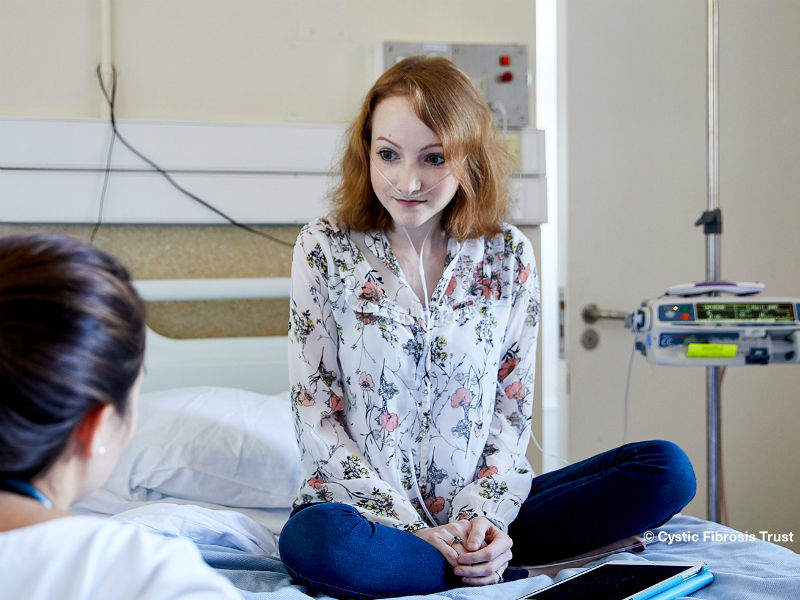
Research conducted during a partnership between Oxford University’s Alan Turing Institute and the Cystic Fibrosis Trust has found that machine learning can predict whether a cystic fibrosis (CF) patient should be referred for a lung transplant with a 35% improvement in accuracy over existing methods.
The research was led by Alan Turing Institute fellow and Oxford professor Mihaela van der Schaar and has been published in Scientific Reports. It is the first machine learning study to use a dataset representing 99% of CF patients living in Britain.
Go deeper with GlobalData

Discover B2B Marketing That Performs
Combine business intelligence and editorial excellence to reach engaged professionals across 36 leading media platforms.
With access to an anonymised extract of UK CF Registry data, van der Schaar and her co-author, PhD student Ahmed Alaa, developed an algorithmic framework that uses machine learning to automate the process of building a prognostic model for CF patients. The algorithmic model, called AutoPrognosis, has a positive predictive value of 65%. Existing methods have been shown to result in 48% of individuals being correctly referred. AutoPrognosis yields a 35% increase in accuracy overall in comparison to current methods.
Alan Turing Institute fellow and Oxford professor Mihaela van der Schaar said: “The outcomes of our research with the Cystic Fibrosis Trust demonstrate that with the right in-depth expertise, anonymised data from a large population, and input from clinicians, we can create algorithmic methods to support clinicians in their day-to-day decision-making.
“I am grateful to the Trust for their support and advice and for insights from patients with cystic fibrosis we have worked within the course of this study. We look forward to continuing to work together to ensure that our work is useful for stakeholders such as patients, families of patients, clinicians and policymakers, for instance.”
Cystic Fibrosis Trust director of strategic innovation Dr Janet Allen added: “We are delighted to be working with colleagues at The Alan Turing Institute on this project. By working collaboratively in this way, we will make significant steps in understanding cystic fibrosis and improving the lives of those affected by it.
US Tariffs are shifting - will you react or anticipate?
Don’t let policy changes catch you off guard. Stay proactive with real-time data and expert analysis.
By GlobalData“For doctors and clinical teams, making decisions with their patients on whether they should be considered for a lung transplant is difficult. Accurate methods to help make that call are vital. This research would not have been possible without the generous consent of people with CF to share their data in the UK CF registry.”
The Cystic Fibrosis Trust believes this research could be used to aid the decision-making processes of clinicians. According to the researchers, the machine learning methods developed in their study could be applied to other diseases in the future.



